About 116 minutes
Cavalry Curt; Or, The Wizard Scout of the Army — Context and Discussion
Adventure Picaresque Fiction
26,576 recorded words. 4 minutes difference from this book's estimate.
View Gutenberg source #67404
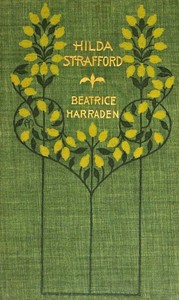
The catalog record for Hilda Strafford: A California Story — Text and Context provides practical reading context through 27,467 words, 2 hr estimated reading time, and 17 detected text sections.
The text analysis averages about 18.3 words per sentence, while the detected sections provide another way to judge how the source is divided.
Project Gutenberg metadata also associates the work with “Married women -- Fiction,” connecting these edition facts with the source record’s subject description.
Explore this collection
These alternatives are selected using recorded categories and estimated reading time.
About 116 minutes
Adventure Picaresque Fiction
26,576 recorded words. 4 minutes difference from this book's estimate.
View Gutenberg source #67404About 107 minutes
Adventure Picaresque Fiction
24,480 recorded words. 13 minutes difference from this book's estimate.
View Gutenberg source #68548About 106 minutes
Adventure Picaresque Fiction
24,236 recorded words. 14 minutes difference from this book's estimate.
View Gutenberg source #67150Search stored excerpts and compare books → Choose by your preferences →
Choices use stored catalog measurements. Estimates vary with reading speed. A shared category is a catalog label, not a claim that two books have the same argument or literary quality.
Search reads excerpt text stored with this catalog and links to its associated Gutenberg record. The connection is stored in the site database; this tool does not recheck that every excerpt is word-for-word identical to that external record. Excerpt search does not cover every chapter and does not verify historical publication dates.
Catalog snapshot checked: 2026-09-26. Coverage: 95 public books, 95 available source excerpts.
Calculated from edition completeness, EPUB availability, text structure and catalogue metadata. Not a user rating.
Total of 100 points, scaled to a 2.5-5.0 range. Editions with an empty description or a missing EPUB file are not scored.
Public-domain source text
The source text is kept in the dedicated reader, separate from this catalogue record and its commentary.
The novel opens with Robert Strafford's acute anxiety as he surveys the isolated ranch he has chosen, wondering if the California landscape will 'smile' to his wife Hilda. The narrative immediately establishes a tension between expectation and reality: the land's beauty emerges only after long delays, and the early spring rains bring a 'faint green garment' that hints at nature's eventual bounty. This patient, almost reluctant transformation mirrors the emotional journey that lies ahead.
Harraden's prose lingers on the physical details of the ranch—the mud, the struggling horses, the precarious reservoir—while also revealing the characters' inner lives through dialogue. Ben and Holles's conversation about women's home-sickness in a new country foreshadows Hilda's own struggle, making the landscape itself a central character in her story.
The dialogue between Ben and Holles reinforces this theme. Ben's observation that women in a new country experience 'home-sickness and desolation, desolation and home-sickness' is a blunt summary of the novel's central conflict. Holles's comment that Hilda is 'out of place here' underscores the gap between her refined background and the ranch's demands. Yet Ben's faith that 'women are wonderful creatures' hints at resilience. The reader is left to watch whether Hilda will indeed 'work her way through' as others have done.
Harraden uses these practical difficulties to reveal character. Robert's 'terrible misgivings' in the opening paragraph are not abstract; they are tied to his ability to provide for Hilda. The reservoir's failure is 'cruel for him' because he has 'worked untiringly.' The novel thus intertwines emotional and material survival, suggesting that Hilda's happiness depends on the land's cooperation as much as on her own adaptability.
These exchanges also establish the novel's social texture. The men speak of 'home-sickness' as a universal female experience, yet their tone is sympathetic rather than dismissive. Ben's story of a woman who 'did not know how to live through the first ten years of home-sickness' is a stark warning. The novel thus prepares readers to view Hilda's story not as an isolated drama but as part of a broader pattern of women's lives on the frontier.
Readers can use these images as interpretive anchors. The frontispiece portrait of Hilda, combined with the chapter titles—'Would it smile to Her?', 'Growing Regrets', 'Attraction and Repulsion', 'The Great Miracle'—suggests a romance plot shadowed by doubt. The final chapter, 'Farewell to California,' implies departure, but the excerpts do not reveal whether it is permanent or temporary. The illustrations thus function as a silent commentary, inviting readers to speculate on the emotional arcs that the text only partially reveals.
Because the excerpts cover only the opening chapters and scattered later scenes, readers should approach the novel as a work that builds its drama through accumulation of small, concrete details rather than dramatic set pieces. Pay attention to how the landscape shifts between seasons and how characters' attitudes toward it change. The dialogue, especially between Ben and Holles, provides a running commentary on Hilda's situation that may deepen as the story progresses. The illustrations offer visual cues to pivotal scenes, but their full significance will emerge only in context.
That afternoon, rain blurred the windows while Hilda’s quiet endurance on that California ranch stayed with me long after I closed the book. Her loneliness felt familiar, almost tangible. Later, idly browsing, I stumbled into another story of western grit and inner weather, and found the same ache, softened by a different sun: The Arizona Callahan — Context and Discussion. I read it in one sitting, the rain still falling outside.
Save your reaction, strongest insight, and memorable passage.