About 84 minutes
Double Identity — Edition Insights
Adventure Picaresque Fiction
19,145 recorded words. 1 minutes difference from this book's estimate.
View Gutenberg source #65282
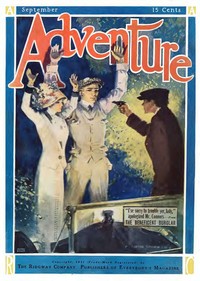
For The Beneficent Burglar — Reading Companion, the stored edition analysis reports 19,403 words, 1 hr 25 min estimated reading time, and 3 detected text sections.
The text analysis averages about 12.9 words per sentence, while the detected sections provide another way to judge how the source is divided.
Project Gutenberg metadata also associates the work with “United States -- Fiction,” connecting these edition facts with the source record’s subject description.
Explore this collection
These alternatives are selected using recorded categories and estimated reading time.
About 84 minutes
Adventure Picaresque Fiction
19,145 recorded words. 1 minutes difference from this book's estimate.
View Gutenberg source #65282About 76 minutes
Adventure Picaresque Fiction
17,435 recorded words. 9 minutes difference from this book's estimate.
View Gutenberg source #67115About 95 minutes
Adventure Picaresque Fiction
21,827 recorded words. 10 minutes difference from this book's estimate.
View Gutenberg source #68379Search stored excerpts and compare books → Choose by your preferences →
Choices use stored catalog measurements. Estimates vary with reading speed. A shared category is a catalog label, not a claim that two books have the same argument or literary quality.
Search reads excerpt text stored with this catalog and links to its associated Gutenberg record. The connection is stored in the site database; this tool does not recheck that every excerpt is word-for-word identical to that external record. Excerpt search does not cover every chapter and does not verify historical publication dates.
Catalog snapshot checked: 2026-09-26. Coverage: 95 public books, 95 available source excerpts.
Calculated from edition completeness, EPUB availability, text structure and catalogue metadata. Not a user rating.
Total of 100 points, scaled to a 2.5-5.0 range. Editions with an empty description or a missing EPUB file are not scored.
Public-domain source text
The source text is kept in the dedicated reader, separate from this catalogue record and its commentary.
The novel opens with a comic disruption: Lewis Copewell bursts into the anteroom of the Honorable Alexander Hamilton Burrow, a lawyer whose recent civic triumph has transformed him from a mere "Aleck" into "Alexander the Great." The scene establishes a tone of farcical bureaucracy, with a glacial secretary and a waiting list of supplicants. Burrow's private door swings open, and he greets Copewell with a smile that reveals "a welcoming row of teeth, which in modern America means 'dee-lighted.'" This blend of satire and physical comedy sets the stage for a story that pairs a self-proclaimed woman-hater with a runaway heiress.
The excerpts trace Burrow's shift from a pompous public figure to a flustered suitor. When he first appears, he is genial but condescending, waving "a smile of benediction" at the waiting crowd. Yet within pages, he is stammering "But—but—" four times in front of Miss Asheton, the runaway heiress. The narrator notes that Burrow is "usually regarded as a loquacious man," making his sudden speechlessness a pointed reversal. His earlier self-assurance dissolves as he fumbles with a car hood, wipes grease from his hands, and awkwardly offers a handshake. The comedy lies in the contrast between his public persona and his private ineptitude.
Miss Asheton, the female lead, is introduced through dialogue rather than description. She is sharp and self-possessed, deflecting Burrow's condescension with dry wit. When he accuses her of being a "woman-hater," she retorts, "It's a man who thinks he's a little wiser than other men, and who is, in fact—she hesitated politely—who may be mistaken." She also mocks his driving: "Aren't you afraid you'll ditch your car if you keep turning around?" Her calm undercuts his bluster, and she even laughs at the absurdity of her situation, musing that "it would make a good farce." The excerpts do not reveal her motives for eloping, but her composure suggests she is more in control than Burrow assumes.
The small town of Jaffa Junction functions as a comic trap. Burrow learns that "all trains are out" until the next morning, and the telegraph office is closed. The town's darkness and sparse houses—"as Chinese beads are strung—at extended intervals"—force the characters into proximity. The car breakdown and lack of transportation become the mechanism that throws Burrow and Miss Asheton together. The setting is not merely backdrop but a plot device that strips Burrow of his urban authority. His car veers into a ditch as he turns to admire Miss Asheton, literalizing his loss of control. The excerpts suggest that the town's isolation will drive the romantic comedy forward.
Readers should attend to the novel's use of repetition and physical comedy: Burrow's stammer, the secretary's glacial demeanor, and the car's near-wreck are all cues that the story prioritizes situation over psychology. The catalog subjects—"United States -- Fiction; Elopement -- Fiction"—are accurate but reductive; the excerpts reveal a work more invested in satirizing masculine vanity than in plotting a conventional elopement. The incomplete text leaves open whether Burrow's conversion from woman-hater to admirer is sincere or merely another pose.
There’s something about the farcical, headlong clash in The Beneficent Burglar that left me thinking of old theatrical programs—each misunderstanding a scene shift. It quietly reminded me of how another book, Lot & Company — Edition Insights, holds its own chaotic ensemble with similar warmth. Both feel like glancing through someone’s yellowed playbill, catching laughter between the lines.
Capture what you thought, learned, and would like to remember.