About 107 minutes
The Arizona Callahan — Context and Discussion
Adventure Picaresque Fiction
24,480 recorded words. 1 minutes difference from this book's estimate.
View Gutenberg source #68548
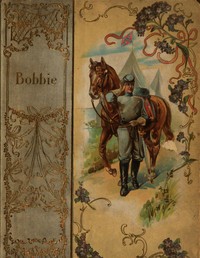
This digital edition of "Bobbie", a Story of the Confederacy — A Reader’s Guide is described by source-level measurements including 24,236 words, 1 hr 46 min estimated reading time, and 12 detected text sections.
The text analysis averages about 24.8 words per sentence, while the detected sections provide another way to judge how the source is divided.
Project Gutenberg metadata also associates the work with “United States -- History -- Civil War, 1861-1865 -- Fiction,” connecting these edition facts with the source record’s subject description.
Explore this collection
These alternatives are selected using recorded categories and estimated reading time.
About 107 minutes
Adventure Picaresque Fiction
24,480 recorded words. 1 minutes difference from this book's estimate.
View Gutenberg source #68548About 116 minutes
Adventure Picaresque Fiction
26,576 recorded words. 10 minutes difference from this book's estimate.
View Gutenberg source #67404About 95 minutes
Adventure Picaresque Fiction
21,827 recorded words. 11 minutes difference from this book's estimate.
View Gutenberg source #68379Search stored excerpts and compare books → Choose by your preferences →
Choices use stored catalog measurements. Estimates vary with reading speed. A shared category is a catalog label, not a claim that two books have the same argument or literary quality.
Search reads excerpt text stored with this catalog and links to its associated Gutenberg record. The connection is stored in the site database; this tool does not recheck that every excerpt is word-for-word identical to that external record. Excerpt search does not cover every chapter and does not verify historical publication dates.
Catalog snapshot checked: 2026-09-26. Coverage: 95 public books, 95 available source excerpts.
Calculated from edition completeness, EPUB availability, text structure and catalogue metadata. Not a user rating.
Total of 100 points, scaled to a 2.5-5.0 range. Editions with an empty description or a missing EPUB file are not scored.
Public-domain source text
The source text is kept in the dedicated reader, separate from this catalogue record and its commentary.
Kate Langley Bosher's 'Bobbie' opens with a distinctive narrative voice that immediately establishes the protagonist's character through his acceptance of his name and broken nose. The story moves between the domestic sphere of 'White Point' plantation and the broader context of the Civil War, using sensory details—like the 'fast-falling snow' and 'great wax candles'—to anchor scenes. The structure alternates between intimate family moments and larger community gatherings, creating a rhythm that mirrors the tension between private life and public conflict.
The first chapter introduces Bobbie through a third-person narrator who adopts a conversational, almost folkloric tone. The narrator explains that Bobbie 'never thought of himself, but always of every one else first,' a trait that defines his actions throughout the excerpts. This direct characterization is reinforced by the use of dialect and nicknames, such as 'Mars’ Bobbie' given by Peter Black. The narrator's voice is warm and intimate, often addressing the reader with phrases like 'he used to say laughingly,' which creates a sense of shared memory. This voice persists even in later chapters, maintaining consistency across the story's shifts in setting.
The excerpts show a deliberate alternation between the plantation's daily life and the disruptions of war. Chapter I describes the pre-war grandeur of 'White Point,' with its race-track and stables, while Chapter VIII plunges into a hurried wedding during wartime. The contrast is stark: earlier, the narrative lingers on the 'spring and fall meets' and the 'good old times'; later, the same house becomes a site of frantic preparation, with Sallie Tom 'bossing the whole affair.' The war is not directly fought on the page but intrudes through details like the 'old trunks' brought from 'Grey Cliffs' at the war's start. This movement between peace and conflict shapes the story's emotional arc.
Bosher repeatedly uses light and fire to signal mood and significance. In Chapter I, the narrative is set in a warm, stable past. In Chapter VIII, the wedding preparations are lit by 'great wax candles' that 'flared up bravely,' casting 'a flood of warm, rich light.' This contrasts with the 'bitterly cold' snow outside, emphasizing the interior warmth of community and celebration. Earlier, Sallie Tom insists on 'as much fire as they wanted, if they friz for it the rest of their lives,' linking fire to generosity and defiance. The imagery of light—candles, fireplaces, and even the 'sputtering' candles—serves as a visual anchor for the story's emotional peaks.
The excerpts reveal a structured social world where enslaved characters like Peter Black and Sallie Tom play crucial roles. Peter Black gives Bobbie his nickname and later helps with wedding decorations; Sallie Tom orchestrates the wedding supper with authority. Their voices are rendered in dialect, and they are shown as active participants in the household's emotional life. The narrative moves between the 'quality folks' and the enslaved community, but always from the perspective of the Tayloe family. This hierarchy is part of the story's fabric, with the war threatening but not yet dismantling it. The wedding scene, with its 'white silken cushions' and 'beautiful old silver candlesticks,' underscores the preservation of tradition amid change.
Readers attentive to Bosher's use of sensory detail and scene transitions will find a story that balances personal resilience with the pressures of a society at war. The narrative's focus on Bobbie's character—his cheerfulness and selflessness—provides a consistent thread through the episodic structure. The excerpts suggest a work that values emotional warmth over historical analysis, making it a portrait of a specific moment in Southern life rather than a sweeping war epic.
Reading about Bosher’s quiet shifts between parlor and battlefield, I remembered my grandmother’s humming during air-raid drills—that strange domestic peace inside fear. I felt that same ache once in Samantha Among the Colored Folks: "My Ideas on the Race Problem" — A Reader’s Guide, where kindness sits uneasy beside unspoken wrongs. Both books hold that hush before history speaks too loudly.
Capture what you thought, learned, and would like to remember.