About 85 minutes
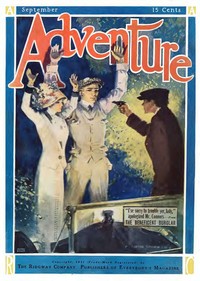
The Beneficent Burglar — Reading Companion
Adventure Picaresque Fiction
19,403 recorded words. 1 minutes difference from this book's estimate.
View Gutenberg source #66872
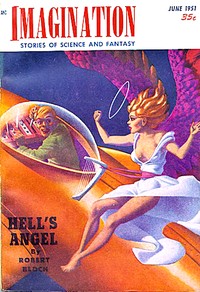
The source record for Double Identity — Edition Insights measures this digital text at 19,145 words, 1 hr 24 min estimated reading time, and 2 detected text sections.
The text analysis averages about 11.8 words per sentence, while the detected sections provide another way to judge how the source is divided.
Project Gutenberg metadata also associates the work with “Authorship -- Fiction,” connecting these edition facts with the source record’s subject description.
Explore this collection
These alternatives are selected using recorded categories and estimated reading time.
About 85 minutes
Adventure Picaresque Fiction
19,403 recorded words. 1 minutes difference from this book's estimate.
View Gutenberg source #66872About 76 minutes
Adventure Picaresque Fiction
17,435 recorded words. 8 minutes difference from this book's estimate.
View Gutenberg source #67115About 95 minutes
Adventure Picaresque Fiction
21,827 recorded words. 11 minutes difference from this book's estimate.
View Gutenberg source #68379Search stored excerpts and compare books → Choose by your preferences →
Choices use stored catalog measurements. Estimates vary with reading speed. A shared category is a catalog label, not a claim that two books have the same argument or literary quality.
Search reads excerpt text stored with this catalog and links to its associated Gutenberg record. The connection is stored in the site database; this tool does not recheck that every excerpt is word-for-word identical to that external record. Excerpt search does not cover every chapter and does not verify historical publication dates.
Catalog snapshot checked: 2026-09-26. Coverage: 95 public books, 95 available source excerpts.
Calculated from edition completeness, EPUB availability, text structure and catalogue metadata. Not a user rating.
Total of 100 points, scaled to a 2.5-5.0 range. Editions with an empty description or a missing EPUB file are not scored.
Public-domain source text
The source text is kept in the dedicated reader, separate from this catalogue record and its commentary.
When a fictional detective punches a villain and then argues with his own author about finishing a story, the reader is thrust into a meta-narrative that questions who really holds the pen. In Double Identity, Grant Dermitt's hero Fleetwood Cassidy has developed a will of his own—literally. The opening excerpt shows Cassidy in classic hardboiled action: he floors a man named Mario, retrieves stolen jewels, and trades barbs with a blonde. But the story quickly pivots to a tense negotiation between creator and creation, where Cassidy refuses to return to the page, citing exhaustion and a newfound girlfriend. The excerpts reveal a deliberate contrast between the pulpy adventure Dermitt wants to write and the mundane details Cassidy insists on, such as his love interest Kitty's "mud colored" eyes and "narrow as a string" mouth.
The excerpts open with a textbook hardboiled scene: a detective named Fleetwood Cassidy punches a fat gangster, retrieves stolen jewels, and trades snappy dialogue with a femme fatale. The language is deliberately tough—"larded slobs," "rod Blanchard," "cooled him"—and the blonde's offer of partnership is couched in the era's pulp idiom: "the music we'd make together wouldn't exactly be Brahms. But it wouldn't be Guy Lombardo, either." Yet this familiar setup is undercut when the narrative shifts to Dermitt's study. Cassidy's creator is a bespectacled, cherubic figure who pleads with his character to finish one last story. The hardboiled tropes are revealed as manufactured, and Cassidy's rebellion against them—his refusal to be a cliché—becomes the real conflict.
The core tension in Double Identity is the battle for control between Grant Dermitt and Fleetwood Cassidy. Dermitt tries to assert his authority: "I'll put you on paper, and you'll have to stay there until I'm done with you." But Cassidy counters with a threat of sabotage: "If you shove me back into that story you're going to have more trouble than you ever dreamed of." The negotiation includes a proposed salary—"so much an hour—retroactive"—and a promise from Dermitt to retire the character. This power dynamic is reinforced by the physical description: Dermitt is small and bespectacled, while Cassidy is the action hero. Yet Cassidy's weariness—"I'm tired, Dermitt. If I have to mix it up with any more gunmen or double-dealing dames I'll have a nervous breakdown"—suggests the character has absorbed the toll of his own adventures.
When Dermitt learns Cassidy has met a girl, he immediately assumes she fits the pulp heroine mold: "Limpid eyes, full of subtle invitation? Green flecked with gold?" Cassidy's responses systematically dismantle each expectation. Kitty's eyes are "mud colored. Flecked with sand." Her mouth is "narrow as a string" and "hard and cool." Her hair is "lusterless" and "brownish." Her figure is "definitely so-so." Dermitt's incredulous reactions—"Are you sure she's any kind of girl at all?"—highlight the gap between authorial fantasy and character reality. Cassidy's insistence on Kitty's ordinariness as "absolutely tremendous" suggests a rejection of the formulaic romance that typically drives pulp fiction. This subversion extends to the narrative itself: the story that Dermitt wants to finish, The Kippered Caper, is described only in passing, its title a joke on the genre's conventions.
Readers approaching Double Identity should attend to the way the excerpts frame the conflict not as a simple adventure but as a negotiation between two wills. The hardboiled dialogue and action are present, but they serve as a backdrop to the meta-fictional struggle. Pay attention to how Cassidy's descriptions of Kitty deliberately invert Dermitt's expectations—this pattern of subversion may extend to other elements of the story. The excerpts leave unresolved whether Cassidy will escape or be forced back to the typewriter, so the reader must watch for how the balance of power shifts in the full text.
I remember the ache of wanting a character to just be, apart from me. That pulpy revolt in Double Identity felt like my own fingers mid-keystroke, hesitating. Then I found The Woman of Knockaloe: A Parable — Themes and Context, where a quiet voice whispers through its own peculiar chains. Both left it lingering: the strange, tender loneliness of a story that needs a shape it keeps outgrowing.
A brief reflection can help important ideas stay with you longer.