About 429 minutes
Satire in the Victorian novel — Story, Setting & Ideas
Historical Psychological Social Fiction
98,609 recorded words. 12 minutes difference from this book's estimate.
View Gutenberg source #67581
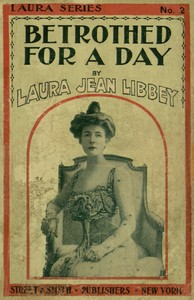
This digital edition of Betrothed for a day: Or, Queenie Trevalyn's love test — Text and Context is described by source-level measurements including 95,804 words, 6 hr 57 min estimated reading time, and 57 detected text sections.
The text analysis averages about 19.9 words per sentence, while the detected sections provide another way to judge how the source is divided.
Project Gutenberg metadata also associates the work with “American fiction -- 20th century,” connecting these edition facts with the source record’s subject description.
Explore this collection
These alternatives are selected using recorded categories and estimated reading time.
About 429 minutes
Historical Psychological Social Fiction
98,609 recorded words. 12 minutes difference from this book's estimate.
View Gutenberg source #67581About 392 minutes
Historical Psychological Social Fiction
90,012 recorded words. 25 minutes difference from this book's estimate.
View Gutenberg source #68676About 389 minutes
Historical Psychological Social Fiction
89,421 recorded words. 28 minutes difference from this book's estimate.
View Gutenberg source #65310Search stored excerpts and compare books → Choose by your preferences →
Choices use stored catalog measurements. Estimates vary with reading speed. A shared category is a catalog label, not a claim that two books have the same argument or literary quality.
Search reads excerpt text stored with this catalog and links to its associated Gutenberg record. The connection is stored in the site database; this tool does not recheck that every excerpt is word-for-word identical to that external record. Excerpt search does not cover every chapter and does not verify historical publication dates.
Catalog snapshot checked: 2026-09-26. Coverage: 95 public books, 95 available source excerpts.
Calculated from edition completeness, EPUB availability, text structure and catalogue metadata. Not a user rating.
Total of 100 points, scaled to a 2.5-5.0 range. Editions with an empty description or a missing EPUB file are not scored.
Public-domain source text
The source text is kept in the dedicated reader, separate from this catalogue record and its commentary.
The wedding scene in Laura Jean Libbey's Betrothed for a Day is built on a striking emotional asymmetry. The bridegroom's face is described as having "almost the ghastliness of death," while the bride, Jess, feels her "heart beating and her every sense tingling deliciously." The narrator dwells on what the groom does not notice—the rosy dawn, the birds, the flowers—underscoring his detachment. This early passage establishes a pattern: the reader is given access to both characters' inner states, but the groom's thoughts are presented as a burden, the bride's as naive joy. The minister's observation that the groom makes no offer to kiss the bride further emphasizes the mismatch. For a first-time reader, this scene signals that the marriage is a transaction, not a romance, and that the title's "love test" may be a trial rather than a game.
The excerpt from the wedding ceremony reveals a deliberate gap in knowledge between the characters. Jess does not hear the name her bridegroom utters; the groom notices this and resolves to tell her later that he is John Dinsmore, not John Moore. This withheld information creates a narrative tension that the reader shares with the groom, not the bride. The narrator's phrasing—"he promised himself that he would surprise her with the startling truth"—positions the reader as complicit in the secret. The ceremony itself is rendered as a "weird dream" for Jess, a phrase that distances her from the event. The minister's benign smile and the "simple, meager furnishings" of the parlor contrast with the gravity of the moment. A first-time reader may wonder whether this secret will be revealed quickly or become a source of prolonged misunderstanding.
The groom's internal conflict is laid bare in the passage leading to the wedding. He has spent the night "pacing up and down under the sycamore trees, looking the future in the face." His decision to marry is framed as a duty imposed by "his uncle's odious will." The narrator states that "nothing but his strict idea that he was doing his duty restrained him from asking little Jess to release him." This language—"strict idea," "restrained," "duty"—paints him as a man bound by honor rather than affection. The repeated use of "little Jess" (three times in the excerpt) emphasizes her youth and vulnerability. The reader may question whether this marriage is a sacrifice or a trap. The groom's preoccupation is so complete that he fails to notice the natural beauty around him, a detail that signals his emotional absence. For a first reading, this section establishes the groom as a figure of tragic obligation, not villainy.
The narrative consistently limits Jess's understanding of the situation. She is described as knowing "so little of the habits of lovers" that she does not notice her companion's lack of eagerness. Her willingness to "go to the other end of the world with him" is presented as innocent devotion, not informed choice. The narrator notes that she would remember the morning "in the years when she understood it better," implying a future awakening. This retrospective framing invites the reader to watch for moments when Jess's perspective shifts. The wedding itself is a blur: she is "dimly conscious of repeating the same words" and hears the minister's pronouncement in a "far-off hazy voice." The groom's failure to kiss her after the ceremony is noted by the minister, but Jess's reaction is omitted. A first-time reader may anticipate that Jess's eventual understanding will be a key turning point.
Libbey's narrator frequently uses contrast to heighten dramatic effect. The groom's "white face, grave even to sternness" is set against the "beautiful rosy dawn." The birds "soaring away toward the blue dome" contrast with the groom's earthbound preoccupation. The minister's observation that the bride was "so young, so sweet and so fair" juxtaposes with the groom's deathly pallor. These contrasts are not merely decorative; they signal the emotional distance between the characters. The phrase "ever afterward seemed like a weird dream" suggests that this moment will haunt Jess. The narrator's choice to end the wedding scene with the minister "rather astounded" leaves the reader with a sense of unresolved tension. For a first reading, these contrasts serve as signposts: the marriage is built on a foundation of mismatched expectations, and the "love test" of the title may involve reconciling these disparities.
Readers approaching Betrothed for a Day for the first time may find it useful to track the flow of information between characters. The excerpts suggest that secrets and misunderstandings drive the plot. Pay attention to what Jess does not know, and to the moments when the narrator shifts focus from one character's thoughts to another's. The title promises a test, but the early chapters frame it as a trial of endurance rather than affection. The novel's structure—57 chapters, each with a melodramatic heading—invites a serialized reading, where each installment deepens the emotional stakes.
That rainy afternoon, I kept returning to Queenie’s wedding scene, struck by how the narrator’s cool distance made her joy feel almost lonely. Later, leafing through unrelated pages, I stumbled upon a footnote that mentioned The Worst Joke in the World — Background and Themes and sat with its quiet absurdity, the way laughter can hollow out a room. Both books seemed to whisper about the spaces between what we say and feel.
Your answers remain private and are stored only in this browser.