About 293 minutes
A landscape painter — Context and Discussion
Historical Psychological Social Fiction
67,331 recorded words. 4 minutes difference from this book's estimate.
View Gutenberg source #68340
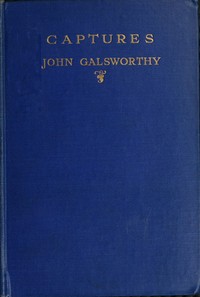
The source record for Captures — Reading Companion measures this digital text at 68,194 words, 4 hr 57 min estimated reading time, and 7 detected text sections.
The text analysis averages about 14.3 words per sentence, while the detected sections provide another way to judge how the source is divided.
Project Gutenberg metadata also associates the work with “England -- Social life and customs -- Fiction,” connecting these edition facts with the source record’s subject description.
Explore this collection
These alternatives are selected using recorded categories and estimated reading time.
About 293 minutes
Historical Psychological Social Fiction
67,331 recorded words. 4 minutes difference from this book's estimate.
View Gutenberg source #68340About 302 minutes
Historical Psychological Social Fiction
69,435 recorded words. 5 minutes difference from this book's estimate.
View Gutenberg source #67043About 287 minutes
Historical Psychological Social Fiction
65,873 recorded words. 10 minutes difference from this book's estimate.
View Gutenberg source #68334Search stored excerpts and compare books → Choose by your preferences →
Choices use stored catalog measurements. Estimates vary with reading speed. A shared category is a catalog label, not a claim that two books have the same argument or literary quality.
Search reads excerpt text stored with this catalog and links to its associated Gutenberg record. The connection is stored in the site database; this tool does not recheck that every excerpt is word-for-word identical to that external record. Excerpt search does not cover every chapter and does not verify historical publication dates.
Catalog snapshot checked: 2026-09-26. Coverage: 95 public books, 95 available source excerpts.
Calculated from edition completeness, EPUB availability, text structure and catalogue metadata. Not a user rating.
Total of 100 points, scaled to a 2.5-5.0 range. Editions with an empty description or a missing EPUB file are not scored.
Public-domain source text
The source text is kept in the dedicated reader, separate from this catalogue record and its commentary.
John Galsworthy’s Captures (1923) opens with a dog bite that escalates into a feud between two farmers, Bowden and Steer. The narrator traces the quarrel’s “psychic origin” to a moment when Bowden’s yellow whippet bit Steer’s ungaitered leg. Steer shoots the dog; Bowden buries it, muttering resentment. The story’s voice is dry, precise, and slightly sardonic, treating the men’s mutual suspicion as a natural outgrowth of their different farming methods—Steer is “thin, spry, red-grey-bearded,” an outsider from Lincolnshire, while Bowden is rooted and slow. The catalogue subject “England – Social life and customs” fits, but the excerpts show that Galsworthy’s interest lies less in broad customs than in the small, stubborn grudges that define rural life.
The first story, “A Feud,” establishes a pattern: conflict arises from a trivial physical event, then festers through unspoken class and regional prejudice. Bowden’s dog bit Steer because the dog “had not liked … his thin legs, his east-wind air.” Galsworthy attributes animal instinct to the dog, but the real animus is Bowden’s. He resents Steer’s “experimental ways of farming” and his habit of being “an hour, a week, a month earlier.” The narrator never moralizes; instead, he reports Bowden’s muttered curses and the “sticky resentment” that oozes from his spirit. The catalogue subject “Short stories, English” is accurate, but the excerpt reveals a specific technique: each story seems to begin with a concrete, almost trivial incident that expands into a psychological study.
In “The Broken Boot,” an actor named Caister is haunted by a split boot that he cannot afford to replace. The story’s climax occurs in a restaurant, where two young women whisper about his “mêche blanche” (white streak of hair) and recognize him as Dr. Dominick from a play. Caister “straightened his back; his smile crept out, he fixed his monocle.” He performs elegance, but the narrator notes he is “managing—so that they could not see—his broken boot.” The detail is small but devastating: the boot becomes a symbol of economic vulnerability masked by theatrical poise. Galsworthy’s prose here is economical, letting the object carry the weight. The story does not explain Caister’s past or future; it simply presents the moment of recognition and concealment.
“Stroke of Lightning” shifts setting to Egypt, where a narrator observes his friend Frank Weymouth and his wife Jessie. Jessie is described as “a very kitten of a woman, brimful of mischief and chaff,” while her husband is “sunny” but “physically run down.” The story’s catalyst is a desert trip, organized after another couple drops out. The replacement couple, the Radolins, are Austrian: he is lively, she is “extraordinarily listless.” The narrator notes her “ice-green eyes with dark lashes” and her habit of “lounging alone.” The excerpt breaks off before the trip’s outcome, but the setup suggests that Galsworthy uses the desert as a pressure cooker for marital dynamics. The catalogue subject “Psychological & Social Fiction” applies, but the story’s voice is observational, not analytical; it records details without explaining motives.
These three stories—from a collection of seventeen—share a method: Galsworthy builds narratives around small, telling objects or gestures. A dog bite, a broken boot, a listless glance: each becomes a fulcrum for character revelation. Readers should attend to the physical details, which often carry more weight than dialogue. The stories do not offer moral conclusions; they present situations and let the reader infer. The catalogue subjects are accurate but broad; the excerpts show a writer more interested in the precise texture of resentment, performance, and desire than in general social commentary.
That rainy afternoon, I kept returning to the broken boot in Galsworthy’s story—how a small, shabby object could expose so much unspoken class tension. It stayed with me strangely. Later, idly searching for something else, I stumbled upon White Magic: A Novel — Reading Notes, and found the same quiet ache, the same careful attention to what people leave unsaid.
Create a short personal record of your experience with this book.