About 542 minutes
The Lake of Wine — Edition Insights
Historical Psychological Social Fiction
124,654 recorded words. 84 minutes difference from this book's estimate.
View Gutenberg source #66415
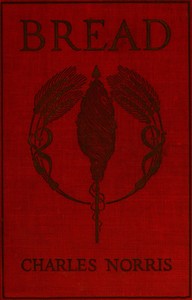
Before opening Bread — Themes and Context, the edition data offers a quick orientation: 143,946 words, 10 hr 26 min estimated reading time, and 24 detected text sections.
The text analysis averages about 17.3 words per sentence, while the detected sections provide another way to judge how the source is divided.
Project Gutenberg metadata also associates the work with “Marriage -- Fiction,” connecting these edition facts with the source record’s subject description.
Explore this collection
These alternatives are selected using recorded categories and estimated reading time.
About 542 minutes
Historical Psychological Social Fiction
124,654 recorded words. 84 minutes difference from this book's estimate.
View Gutenberg source #66415About 521 minutes
Historical Psychological Social Fiction
119,748 recorded words. 105 minutes difference from this book's estimate.
View Gutenberg source #66489About 517 minutes
Historical Psychological Social Fiction
118,726 recorded words. 109 minutes difference from this book's estimate.
View Gutenberg source #66150Search stored excerpts and compare books → Choose by your preferences →
Choices use stored catalog measurements. Estimates vary with reading speed. A shared category is a catalog label, not a claim that two books have the same argument or literary quality.
Search reads excerpt text stored with this catalog and links to its associated Gutenberg record. The connection is stored in the site database; this tool does not recheck that every excerpt is word-for-word identical to that external record. Excerpt search does not cover every chapter and does not verify historical publication dates.
Catalog snapshot checked: 2026-09-26. Coverage: 95 public books, 95 available source excerpts.
Calculated from edition completeness, EPUB availability, text structure and catalogue metadata. Not a user rating.
Total of 100 points, scaled to a 2.5-5.0 range. Editions with an empty description or a missing EPUB file are not scored.
Public-domain source text
The source text is kept in the dedicated reader, separate from this catalogue record and its commentary.
The novel opens with a music lesson interrupted by a blunt announcement: "There's no bread." This domestic crisis, set off by a debt to the delicatessen, immediately establishes the financial precarity that will shadow Jeannette Sturgis. Norris renders the scene through clipped dialogue and Mrs. Sturgis's theatrical sweetness—a voice that "disguise[s] annoyance"—revealing family tensions without exposition. The title itself, Bread, signals the material concerns that drive the narrative.
Norris favors understatement over melodrama. When Jeannette returns to her former office as a married woman, the narrative notes her changed posture: she now enters "with the air of a lady who had perhaps arrived to select a book." The observation is quiet but loaded. The prose mirrors her detachment, cataloging the familiar details—"cold cement floors," "sprinkler valves"—with a cool precision that suggests both affection and estrangement. Dialogue often carries subtext: Mrs. Sturgis's repeated "dearie" masks irritation; Jeannette's unfinished sentences leave meaning hanging. This restraint creates a texture of unspoken pressures, where what is not said matters as much as what is.
The narrative alternates between compressed domestic scenes and broader temporal leaps. The opening chapter lingers on a single afternoon's tension; later, a section begins "Some six weeks after her return to New York," skipping over weeks in a sentence. These jumps mirror Jeannette's own sense of time's uneven passage—the drag of a constrained day versus the blur of change. Norris also shifts focalization: early passages stay close to Jeannette's irritation, while later ones adopt a more detached, almost sociological view of her married life. The effect is a layering of intimacy and distance, as if the novel itself is uncertain how close it wants to get.
Norris builds meaning through material details. The "shabby imitation leather bag" from which Mrs. Sturgis extracts her purse; the "braided broadcloth tailor suit" and "fine meshed veil" Jeannette wears to her old office—these items carry the weight of social performance. When Martin Devlin proposes a dinner to impress his brother, he plans to "get some good old Burgundy" and "Corona-Coronas," treating hospitality as a calculated investment. Such details do not merely decorate; they anchor the characters' aspirations and anxieties in physical objects. The novel's attention to what people own, wear, and consume gives its social critique a tactile, unsentimental edge.
Readers should attend to the novel's handling of time and voice. Norris often withholds direct judgment, letting scenes accumulate through small, telling gestures. The excerpts suggest a work more interested in the texture of daily life than in dramatic plot turns. Pay attention to how characters speak around their feelings, and how the prose shifts between close interiority and cool observation. These choices give Bread a quiet, cumulative power that rewards patient reading.
That gray afternoon, I finished Bread and sat with its quiet ache—a woman’s choices folded into laundry and ledgers. The rain kept falling, and I reached for something else, almost without deciding. The High Place: A Comedy of Disenchantment — Context and Discussion felt like a different kind of weather, brighter on the surface, but underneath, that same knowing shrug at how little we control.
Answer a few questions and save a private reflection on this device.