About 517 minutes
Gleaner Tales — Inside the Classic
Historical Psychological Social Fiction
118,726 recorded words. 4 minutes difference from this book's estimate.
View Gutenberg source #66150
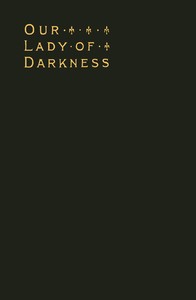
Before opening Our Lady of Darkness — Reading Companion, the edition data offers a quick orientation: 119,748 words, 8 hr 41 min estimated reading time, and 12 detected text sections.
The text analysis averages about 15.4 words per sentence, while the detected sections provide another way to judge how the source is divided.
Project Gutenberg metadata also associates the work with “Historical fiction,” connecting these edition facts with the source record’s subject description.
Explore this collection
These alternatives are selected using recorded categories and estimated reading time.
About 517 minutes
Historical Psychological Social Fiction
118,726 recorded words. 4 minutes difference from this book's estimate.
View Gutenberg source #66150About 506 minutes
Historical Psychological Social Fiction
116,225 recorded words. 15 minutes difference from this book's estimate.
View Gutenberg source #67929About 542 minutes
Historical Psychological Social Fiction
124,654 recorded words. 21 minutes difference from this book's estimate.
View Gutenberg source #66415Search stored excerpts and compare books → Choose by your preferences →
Choices use stored catalog measurements. Estimates vary with reading speed. A shared category is a catalog label, not a claim that two books have the same argument or literary quality.
Search reads excerpt text stored with this catalog and links to its associated Gutenberg record. The connection is stored in the site database; this tool does not recheck that every excerpt is word-for-word identical to that external record. Excerpt search does not cover every chapter and does not verify historical publication dates.
Catalog snapshot checked: 2026-09-26. Coverage: 95 public books, 95 available source excerpts.
Calculated from edition completeness, EPUB availability, text structure and catalogue metadata. Not a user rating.
Total of 100 points, scaled to a 2.5-5.0 range. Editions with an empty description or a missing EPUB file are not scored.
Public-domain source text
The source text is kept in the dedicated reader, separate from this catalogue record and its commentary.
The novel begins not in revolutionary France but in the drawing-rooms of London, with a portrait of the third Viscount Murk so exaggerated it borders on the grotesque. Bernard Capes describes the old peer as a 'doyen of dandy-cocks' and a 'macaroni with a cuticle so hardened by the paint and powder of near fourscore years as to be impervious to the shafts of ridicule.' His daily ritual of ogling ladies from his verandah is rendered with a satirical edge that recalls eighteenth-century caricature. Yet the epigraph, taken from De Quincey, warns of a darker force: 'Our Lady of Darkness,' who rules only those 'in whom a profound nature has been upheaved by central convulsions.' This tension between brittle comedy and looming catastrophe sets the stage for a narrative that will move from the absurdities of aristocratic London to the convulsions of Paris.
The first chapter introduces the Viscount Murk as a figure of pure vanity: he 'would blow a kiss along the palm of his palsied hand' and 'leer through quizzing-glasses of a power to exhibit in horrible accent the rheum of his eyes.' Capes’s prose is deliberately ornate, piling up clauses and epithets to mimic the excess it describes. The narrator’s voice is arch, even cynical: 'Nature, in fact, was a dealer of ridiculous limitations; art, a merchant of inexhaustible surprises.' This satirical mode, however, is not sustained. When the Viscount dies suddenly—'dead of a rushing apoplexy'—the tone shifts. The narrator’s curt dismissal ('That is all that it is necessary to say about him') suggests a deliberate truncation of comedy. The reader is left to wonder whether the novel’s real subject lies elsewhere, perhaps in the 'white face, crowned with a mass of beautiful hair' that appears briefly in the doorway.
By Book II, the setting has moved to Suffolk, but the Revolution remains a distant pressure. Edward, now Lord Murk, has sold the London properties and lives quietly at 'Stowling.' The narrator notes that he 'had not once been abroad' in three years, yet he follows 'the progress of the great Revolution' and may have contributed to its 'sinews of war.' His earlier Paris experiences have given 'final direction' to his ethical speculations, though he remains 'theoretically as convinced as ever that men should be made virtuous by Act of Parliament.' The language here is more measured, less flamboyant, reflecting a protagonist who has withdrawn from action into reflection. The reader, however, knows from the epigraph that such withdrawal may be temporary: 'Our Lady of Darkness' approaches only those 'in whom the heart trembles, and the brain rocks under conspiracies of tempest.'
Two details from the opening chapters reward attention. First, the Viscount’s coat of arms includes 'that bar-sinister which would appear to be designed for emphasis of the fact that the word rank has a double meaning.' This heraldic mark of illegitimacy hints at hidden lineage or moral stain. Second, the apparition of a woman’s face—'a white face, crowned with a mass of beautiful hair'—appears at the moment of the Viscount’s death and then vanishes. The narrator does not explain it, but the image recurs later in Ned’s daydreams: 'often in his day-dreams he would be back at Madame Gamelle’s, watching all...' The ellipsis is in the text, suggesting a memory too painful or incomplete to articulate. These motifs—the bar sinister and the haunting face—may be keys to the novel’s deeper concerns with identity, guilt, and the return of the repressed.
The De Quincey epigraph names 'Mater Tenebrarum—Our Lady of Darkness' as 'the defier of God' and 'the mother of lunacies.' It specifies that she rules only a 'narrow nation'—those 'in whom a profound nature has been upheaved by central convulsions.' This framing invites the reader to see the Revolution not merely as a historical backdrop but as a psychological and spiritual upheaval. The novel’s title, then, is not a reference to the Virgin Mary but to a darker feminine principle. The excerpts do not reveal how this principle manifests in the plot, but the epigraph suggests that the characters most susceptible to her influence are those already shaken by inner or outer tempest. As you read, note which characters experience such 'central convulsions' and how the novel’s language shifts when it approaches them.
The excerpts from Our Lady of Darkness show a novel in motion: from satirical portraiture to psychological drama, from London to Paris, from the brittle comedy of the old Viscount to the haunted stillness of his successor. The epigraph warns of a force that thrives on upheaval, and the text itself seems to enact that upheaval in its tonal shifts and narrative gaps. Pay attention to moments when the ornate prose gives way to something more stark, or when a character’s past intrudes on the present without explanation. These may be the points where 'Our Lady of Darkness' makes her presence felt.
I kept thinking about how Our Lady of Darkness wraps its sorrow in that old, satirical voice, and then lets it fray against the Revolution’s real blood. It reminded me of another quiet story, Gabrielle de Bergerac — Story, Setting & Ideas, where a similar gentleness sits under pressure. Both left me holding a feeling I couldn’t quite name, just carrying it around for days after.
A brief reflection can help important ideas stay with you longer.