About 297 minutes
Captures — Reading Companion
Historical Psychological Social Fiction
68,194 recorded words. 5 minutes difference from this book's estimate.
View Gutenberg source #65252
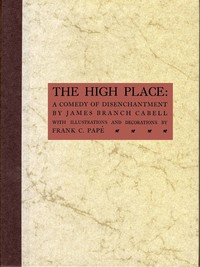
Before opening The High Place: A Comedy of Disenchantment — Context and Discussion, the edition data offers a quick orientation: 69,435 words, 5 hr 2 min estimated reading time, and 41 detected text sections.
The text analysis averages about 21.3 words per sentence, while the detected sections provide another way to judge how the source is divided.
Project Gutenberg metadata also associates the work with “Historical fiction,” connecting these edition facts with the source record’s subject description.
Explore this collection
These alternatives are selected using recorded categories and estimated reading time.
About 297 minutes
Historical Psychological Social Fiction
68,194 recorded words. 5 minutes difference from this book's estimate.
View Gutenberg source #65252About 293 minutes
Historical Psychological Social Fiction
67,331 recorded words. 9 minutes difference from this book's estimate.
View Gutenberg source #68340About 287 minutes
Historical Psychological Social Fiction
65,873 recorded words. 15 minutes difference from this book's estimate.
View Gutenberg source #68334Search stored excerpts and compare books → Choose by your preferences →
Choices use stored catalog measurements. Estimates vary with reading speed. A shared category is a catalog label, not a claim that two books have the same argument or literary quality.
Search reads excerpt text stored with this catalog and links to its associated Gutenberg record. The connection is stored in the site database; this tool does not recheck that every excerpt is word-for-word identical to that external record. Excerpt search does not cover every chapter and does not verify historical publication dates.
Catalog snapshot checked: 2026-09-26. Coverage: 95 public books, 95 available source excerpts.
Calculated from edition completeness, EPUB availability, text structure and catalogue metadata. Not a user rating.
Total of 100 points, scaled to a 2.5-5.0 range. Editions with an empty description or a missing EPUB file are not scored.
Public-domain source text
The source text is kept in the dedicated reader, separate from this catalogue record and its commentary.
The novel opens with Florian de Puysange, a nobleman, feeling out of place in his own company—a detail that sets the tone for a story about disenchantment. The subtitle, A Comedy of Disenchantment, signals Cabell's ironic treatment of romantic quests. Early chapters like "The Child Errant" and "Sayings about Puysange" introduce a protagonist who is both a dreamer and a skeptic, a combination that drives the narrative.
Cabell's prose is arch and allusive, peppered with literary references and wry observations. The structure, divided into three parts with chapter titles like "Widowers Seek Consolation" and "Economics of an Old Race," suggests a methodical unraveling of Florian's illusions. Readers should note the recurring motif of the sword Flamberge, which appears as both a literal object and a symbol of unattainable desire.
The sword Flamberge is the central object of Florian's desire, but Cabell treats it with characteristic irony. In an early conversation, a mysterious figure recounts casting the sword into the sea to avoid sorcery, yet still achieving his desire—only to find marriage "as happy as most marriages." This deflation of heroic expectation is typical of the novel's tone. Florian's pursuit of Flamberge leads him to the realm of Antan, a kind of ancestral limbo where he meets figures who are both his forebears and ordinary people. The dialogue between Florian and Horvendile, who guides him into Antan, is laced with philosophical banter about the nature of desire and the disappointments of fulfillment. Cabell uses the sword not as a MacGuffin but as a pretext for exploring the gap between romantic ideals and lived experience.
When Florian meets his ancestors in Antan, he is disappointed to find them "just ordinary persons, persons too who seem quite down in the mouth." This moment crystallizes the novel's critique of romantic genealogy. Horvendile explains that the life of their ancestor Manuel "did not perish" but endures in his descendants, a notion that Florian finds both philosophically intriguing and personally deflating. Cabell uses this encounter to satirize the idea of noble lineage: Florian's forebears are not heroic but mundane, and their presence undermines his self-image. The passage also introduces the theme of inherited life—a kind of biological continuity that reduces individual achievement to a mere link in a chain. Readers should pay attention to how Cabell balances this deterministic view with Florian's continued striving.
The subtitle is not merely descriptive but programmatic. Throughout the excerpts, characters repeatedly undercut grand gestures with dry remarks. When one figure boasts of avoiding desire, another retorts, "Then you are braver than I: but you are certainly not a monstrous clever fellow." This exchange typifies the novel's humor: wisdom is presented as a form of cowardice, and heroism as foolishness. Cabell's style is conversational yet ornate, with characters speaking in aphorisms that invite rereading. The comedy arises not from slapstick but from the gap between what characters say and what they do, and from the persistent deflation of romantic tropes. Florian himself is both the butt and the vehicle of this comedy, as he oscillates between earnest desire and ironic self-awareness.
The novel is divided into three parts, each with a subtitle: "The End of Long Wanting," "The End of Light Winning," and "The End of Lean Wisdom." These headings suggest a progression from desire through achievement to disillusionment, but the excerpts indicate that Cabell's treatment is nonlinear and digressive. Chapter titles like "Problems of Beauty," "Niceties of Fratricide," and "The Gander That Sang" promise both philosophical inquiry and absurdity. The table of contents reveals a pattern of pairing abstract concepts with concrete situations, a technique that keeps the reader off balance. For a first reading, paying attention to the chapter titles can provide clues to the novel's shifting focus, but the real pleasure lies in Cabell's prose, which rewards careful attention to word choice and rhythm.
Readers approaching The High Place for the first time should set aside expectations of a conventional fantasy or historical novel. Cabell's work is best enjoyed as a conversation—between the author and his literary predecessors, between Florian and his ancestors, and between the reader and the text. The novel's humor is dry, its philosophy skeptical, and its structure deliberately episodic. Let the chapter titles guide you, but do not expect a straightforward plot. Instead, savor the dialogue and the ironic asides, which are the true substance of this comedy.
That rainy afternoon, The High Place left me with Florian’s quiet ache—how even a magic sword can’t mend a weary heart. I set it down, and my fingers found another book nearby, one about rougher lives and harder truths. The bushwhackers & other stories — Story, Setting & Ideas felt like stepping from a misty castle into cold, honest rain. Both left me strangely comforted.
Capture what you thought, learned, and would like to remember.