About 297 minutes
Captures — Reading Companion
Historical Psychological Social Fiction
68,194 recorded words. 4 minutes difference from this book's estimate.
View Gutenberg source #65252
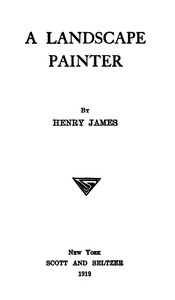
For A landscape painter — Context and Discussion, the stored edition analysis reports 67,331 words, 4 hr 53 min estimated reading time, and 6 detected text sections.
The text analysis averages about 15.5 words per sentence, while the detected sections provide another way to judge how the source is divided.
Project Gutenberg metadata also associates the work with “American fiction -- 19th century,” connecting these edition facts with the source record’s subject description.
Explore this collection
These alternatives are selected using recorded categories and estimated reading time.
About 297 minutes
Historical Psychological Social Fiction
68,194 recorded words. 4 minutes difference from this book's estimate.
View Gutenberg source #65252About 287 minutes
Historical Psychological Social Fiction
65,873 recorded words. 6 minutes difference from this book's estimate.
View Gutenberg source #68334About 302 minutes
Historical Psychological Social Fiction
69,435 recorded words. 9 minutes difference from this book's estimate.
View Gutenberg source #67043Search stored excerpts and compare books → Choose by your preferences →
Choices use stored catalog measurements. Estimates vary with reading speed. A shared category is a catalog label, not a claim that two books have the same argument or literary quality.
Search reads excerpt text stored with this catalog and links to its associated Gutenberg record. The connection is stored in the site database; this tool does not recheck that every excerpt is word-for-word identical to that external record. Excerpt search does not cover every chapter and does not verify historical publication dates.
Catalog snapshot checked: 2026-09-26. Coverage: 95 public books, 95 available source excerpts.
Calculated from edition completeness, EPUB availability, text structure and catalogue metadata. Not a user rating.
Total of 100 points, scaled to a 2.5-5.0 range. Editions with an empty description or a missing EPUB file are not scored.
Public-domain source text
The source text is kept in the dedicated reader, separate from this catalogue record and its commentary.
Henry James's A Landscape Painter collects four tales written before his twenty-fifth year, first published in periodicals like the Atlantic Monthly and the Galaxy. The stories reveal a young author already attentive to the subtleties of conversation and inner conflict. In the title story, the dialogue between Gertrude Whittaker and Major Luttrel demonstrates James's early interest in conditional statements and emotional negotiation: 'If I loved you, Major Luttrel,' she says, 'I should value the idea for my own sake.' Such exchanges build character through indirect speech and withheld feeling.
James crafts conversations that advance plot and reveal character through implication rather than declaration. In the excerpt from 'A Landscape Painter,' Major Luttrel and Gertrude Whittaker debate love, war, and feeling with a formal, almost legalistic precision. The Major speaks of 'conditional reply' and 'the if understood,' while Gertrude parries with directness that still holds back. Their exchange is a verbal duel where each word carries weight. James avoids melodrama; instead, he lets the rhythm of question and answer expose vulnerability. The Major's confession—'I'm not one of the great unfathomable ones'—is both self-deprecating and a bid for intimacy. This technique, visible across the collection, makes dialogue the primary engine of drama.
The Civil War is not a battlefield but a moral pressure in these stories. Gertrude calls war 'an infamy' that makes women 'more spiteful than ever,' while Luttrel defends it as 'a revolution' that 'won't leave us as it found us.' Their disagreement is not about strategy but about how conflict reshapes private feeling. James uses the war to test characters' convictions: Luttrel argues that 'serious feelings' survive upheaval, while Gertrude insists that war degrades those left behind. This tension between public crisis and private emotion recurs in the collection, grounding the psychological drama in a specific historical moment without ever depicting combat.
These tales, written before James turned twenty-five, already show his characteristic preference for indirect narration and moral ambiguity. The preface by Albert Mordell notes that James himself thought highly enough of them to collect them in an 1885 English edition titled Short Stories Revived. The stories are reprinted here from the original periodicals, preserving their early form. Readers familiar with James's later work will recognize the seeds of his mature style: a focus on consciousness, a reluctance to resolve emotional questions neatly, and a fascination with the gap between what characters say and what they mean. The conditional mood that pervades the dialogue—'Can you? or I will even content myself with putting it in the conditional again'—is a hallmark of James's method.
This volume brings together four stories that originally appeared in 1866-1868: 'A Landscape Painter,' 'Poor Richard,' 'A Day of Days,' and 'A Most Extraordinary Case.' The preface recounts how William Dean Howells, then assistant editor of the Atlantic Monthly, recommended 'Poor Richard' for publication, leading to a lasting literary friendship. Howells later recalled saying, 'Yes, and all the stories you can get from that writer.' These tales represent James's first published fiction, and their reissue in America in 1919—after an earlier English edition—made them more accessible to his home audience. The stories are not apprentice works but accomplished studies of love, honor, and self-deception, set in a nation recovering from war.
Readers approaching A Landscape Painter will find a young writer already in command of his craft, using dialogue and moral ambiguity to explore the inner lives of his characters. The Civil War provides a distant but persistent pressure, shaping how people speak about love and duty. These stories reward attention to what is left unsaid, and to the careful architecture of each conversation. They offer a valuable glimpse into James's development, without the density of his later novels, yet with the same psychological acuity.
I’ve often thought James’s early tales, with their quiet scrutiny of self-deception, share a peculiar kinship with The High Place: A Comedy of Disenchantment — Context and Discussion. Both circle that gentle ache when dreams prove hollow—though one whispers it, while the other laughs ruefully. Both left me, long after closing, musing on the cost of getting precisely what one wished for.
Your answers remain private and are stored only in this browser.