About 429 minutes
Satire in the Victorian novel — Story, Setting & Ideas
Historical Psychological Social Fiction
98,609 recorded words. 20 minutes difference from this book's estimate.
View Gutenberg source #67581
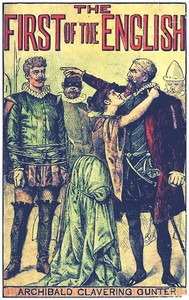
The source record for The First of the English: A Novel — Themes and Context measures this digital text at 103,159 words, 7 hr 29 min estimated reading time, and 26 detected text sections.
The text analysis averages about 17.5 words per sentence, while the detected sections provide another way to judge how the source is divided.
Project Gutenberg metadata also associates the work with “Historical fiction,” connecting these edition facts with the source record’s subject description.
Explore this collection
These alternatives are selected using recorded categories and estimated reading time.
About 429 minutes
Historical Psychological Social Fiction
98,609 recorded words. 20 minutes difference from this book's estimate.
View Gutenberg source #67581About 417 minutes
Historical Psychological Social Fiction
95,804 recorded words. 32 minutes difference from this book's estimate.
View Gutenberg source #68760About 506 minutes
Historical Psychological Social Fiction
116,225 recorded words. 57 minutes difference from this book's estimate.
View Gutenberg source #67929Search stored excerpts and compare books → Choose by your preferences →
Choices use stored catalog measurements. Estimates vary with reading speed. A shared category is a catalog label, not a claim that two books have the same argument or literary quality.
Search reads excerpt text stored with this catalog and links to its associated Gutenberg record. The connection is stored in the site database; this tool does not recheck that every excerpt is word-for-word identical to that external record. Excerpt search does not cover every chapter and does not verify historical publication dates.
Catalog snapshot checked: 2026-09-26. Coverage: 95 public books, 95 available source excerpts.
Calculated from edition completeness, EPUB availability, text structure and catalogue metadata. Not a user rating.
Total of 100 points, scaled to a 2.5-5.0 range. Editions with an empty description or a missing EPUB file are not scored.
Public-domain source text
The source text is kept in the dedicated reader, separate from this catalogue record and its commentary.
The novel opens with a flood on the Schelde, immediately establishing water as a central image. Captain Guy Stanhope Chester, barely twenty-five, navigates his ship through darkness and spray, his lantern shaded to avoid detection. This maritime setting recurs throughout, from smuggling operations under false flooring to a battle on skates. The text moves between shipboard tension and urban intrigue, with the captain shuttling between his vessel, an artist's studio, and the warehouses of Antwerp. The structure relies on these physical transitions—from sea to shore, from public quay to secret hold—to propel the narrative forward.
The Schelde flood in the first chapter is not merely a backdrop; it introduces a pattern of water-related imagery that surfaces repeatedly. Guy shakes spray from his tarpaulin, waves chase the ship, and later, a battle takes place on skates. The river itself becomes a character, shaping the plot's movement. Even the smuggling operation is tied to the tide: the moon goes down at ten, and the hour for unloading is set for eleven. This attention to the water's rhythms gives the story a tangible, physical pulse.
In the excerpt, Guy discovers twelve cases of goods hidden under his cabin's false flooring. The consignee, Jan Olins, instructs him to unload them late at night, calling it “avoiding the tenth penny.” Guy's reaction—opening a case, then whistling softly with respect—hints at the cargo's nature without revealing it. This episode is a pivot: it ties the maritime setting to the city's underground economy and raises stakes for the protagonist. The structure of the novel, with its chapter titles like “The Secret of the Statue” and “The Duke’s Unlucky Penny,” suggests that such clandestine transactions are central to the plot.
Guy's movements are constantly watched. The boatswain mutters Spanish words to avoid detection, and the crew fears being burned alive. Guy himself spies on the painter's studio, drawing a curtain to gaze at a portrait. The dove cote, with its six pigeons and no letters, implies a failed communication network. These details create a world where nothing is straightforward: characters look over their shoulders, whisper behind closed doors, and read hidden meanings into everyday objects. The novel's structure mirrors this paranoia, with scenes alternating between open action and covert planning.
The narrative shuttles between three primary locations: the ship, the artist's studio, and the city's warehouses. Each space has its own rules. On the ship, Guy commands; in the studio, he gazes at art; in the warehouse, he negotiates with Olins. The chapter titles reinforce this mobility: “A Strange Trip to Antwerp,” “The Lady of the Barge,” “The Drinking Bout at the Painted Inn.” The reader is never allowed to settle, mirroring the protagonist's restless energy. This constant movement—from sea to shore, from public to private—gives the novel a cinematic quality, even as it remains rooted in the 16th-century setting.
Readers should attend to the way Gunter uses physical objects—a statue, a penny, a dove cote—as narrative hinges. The excerpts suggest that these items are not decorative but functional, driving the plot forward. The novel rewards attention to detail, especially in scenes where characters move between light and shadow, speech and silence. The Eighty Years' War provides a backdrop, but the real drama lies in the spaces between official history: the smuggler's hold, the painter's studio, the locked cabin.
Reading about Chester’s silent watch over Antwerp’s canals, I remembered a rainy afternoon, the same held breath of secrecy. The Crystal Cup — Reading Companion once gave me that identical pause—a story waiting underneath the surface, like water under a lid. Not the action, but the quiet space between one ripple and the next, where everything feels possible.
Save your reaction, strongest insight, and memorable passage.