1

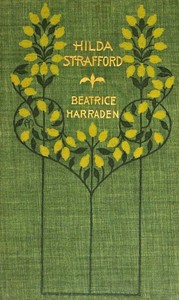
Hilda Strafford: A California Story — Text and Context
(10 User reviews)
1729
Project Gutenberg
2022
Not confirmed
Married women -- Fiction; California -- Fiction; Ranches -- Fiction
Readers of public-domain and historical texts
Project Gutenberg digital edition
en
Edition facts
Words
27,467
Reading time
120 min
Text sections
17
The catalog record for Hilda Strafford: A California Story — Text and Context provides practical reading context through 27,467 words, 2 hr estimated reading time, and 17 detected text sections.
The text analysis averages about 18.3 words per sentence, while the detected sections provide another way to judge how the source is divided.
Project Gutenberg metadata also associates the work with “Married women -- Fiction,” connecting these edition facts with the source record’s subject description.
Source:
Project Gutenberg record #67881
Beatrice Harraden's 1897 novel follows Hilda Strafford's arrival at an isolated California ranch, where the landscape's slow transformation and her husband's anxieties set the stage for a story of adaptation, loneliness, and resilience.
Editorial Edition Score
4.8/5
★★★★★
★★★★★
Calculated from edition completeness, EPUB availability, text structure and catalogue metadata. Not a user rating.
How this score is calculated
- Description quality20 pts
- Title & short description10 pts
- Source metadata20 pts
- Text length15 pts
- Chapters / structure15 pts
- EPUB file integrity20 pts
Total of 100 points, scaled to a 2.5-5.0 range. Editions with an empty description or a missing EPUB file are not scored.
Edition quality
Read the Text
obert Strafford was offering but a desolate home to his bride. Outside at least there were flowers and creepers, and ranges of splendid mountains, and beautiful soft lights and shades changing constantly, and fragrances in the air born of spring; but inside this dreary little house, there was nothing to cast a glamour of cheerfulness. Nothing. For the moment Ben’s heart sank, but when he glanced at his friend, he forced himself to smile approvingly.
“You’ve bought a capital little coal-oil stove, Bob,” he said. “That is the best kind, undoubtedly. I’m going to have scores of cosy meals off that, I can tell you. I think you could have done with two or three more saucepans, old man. But that is as nice a little stove as you’ll see anywhere. A rocking-chair! Good. And a cushion too, by Jove! And a book-shelf, with six brand-new books on it, including George Meredith’s last novel and Ibsen’s new play.”
“Hilda is fond of reading,” said Robert Strafford, gaining courage from his friend’s approval.
“And some curtains,” continued Ben. “And a deucèd pretty pattern too.”
“I chose them myself,” said the other, smiling proudly,--“and, what’s more, I stitched them myself!”
So they went on, Ben giving comfort and Bob taking it; and then they made a few alterations in the arrangement of the furniture, and they tried the effect of the table-cloth and the lamp-shade, and Bob put a few flowers in the vase, and stood at the door to see how everything looked.
“Will it smile to her, will it smile to her, I wonder?” he said, anxiously.
“Of course it will,” said Ben, also stepping back to see the whole effect.
“That lamp-shade and that table-cloth and that vase and that toasting-fork settle the whole matter, in my mind!”
“If there were only some nice neighbours,” said Robert Strafford. “But there isn’t a soul within six miles.”
“You are surely forgetting the deaf lady with the ear-trumpet,” remarked Ben, mischievously.
“Don’t be a fool, Ben,” said Robert Strafford, shortly.
“She is not exactly a stimulating companion,” continued Ben, composedly, “but she is better than no one at all. And then there’s myself. I also am better than no one at all. I don’t think you do so badly after all, in spite of your grumblings. Then eight miles off live Lauderdale and Holles and Graham. Since Jesse Holles returned from his travels, they are as merry a little company as you would wish to see anywhere.”
“Hilda is so fond of music,” said Robert Strafford, sadly, “and I have no piano for her as yet.”
“That is soon remedied,” answered Ben. “But why didn’t you tell me these things before? The ear-trumpet lady has a piano, and I daresay with a little coaxing she would lend it to you. I’m rather clever at coaxing through a trumpet; moreover, she rather likes me. I have such a gentle voice, you know, and I believe my moustache is the exact reproduction of one owned by her dead nephew! Her dead nephew certainly must have had an uncommonly fine moustache! Well, about the piano. I’ll see what I can do; and meanwhile, for pity’s sake, cheer up.”
He put his hand kindly on his friend’s shoulders.
“Yes, Bob, I mean what I say,” he continued; “for pity’s sake, cheer up, and don’t be receiving her ladyship with the countenance of a boiled ghost. That will depress her far more than anything in poor old California. Be your old bright self again, and throw off all these misgivings. You’ve just worked yourself out, and you ought to have taken a month’s holiday down the coast. You would have come back as strong as a jack-rabbit and as chirpy as a little horned toad.”
“Oh, I shall be all right,” said Robert Strafford; “and you’re such a brick, Ben. You’ve always been good to me. I’ve been such a sullen cur lately. But for all that--”
“But for all that, you’re not a bad fellow at your best,” said Ben, smiling; “and now come back with me. I can’t have you mooning here by yourself to-night. Come back with me, and I’ll cook you a splendid piece of steak, and I’ll send you off in excellent form to meet and marry her ladyship to-morrow morning. Then whilst you are off on that errand, I’ll turn in here and make the place as trim as a ship’s cabin, and serve up a nice little dinner fit for a king and queen. Come on, old man. I half think there may be rain to-night.”
The novel opens with Robert Strafford's acute anxiety as he surveys the isolated ranch he has chosen, wondering if the California landscape will 'smile' to his wife Hilda. The narrative immediately establishes a tension between expectation and reality: the land's beauty emerges only after long delays, and the early spring rains bring a 'faint green garment' that hints at nature's eventual bounty. This patient, almost reluctant transformation mirrors the emotional journey that lies ahead.
Harraden's prose lingers on the physical details of the ranch—the mud, the struggling horses, the precarious reservoir—while also revealing the characters' inner lives through dialogue. Ben and Holles's conversation about women's home-sickness in a new country foreshadows Hilda's own struggle, making the landscape itself a central character in her story.
A Landscape of Waiting
The dialogue between Ben and Holles reinforces this theme. Ben's observation that women in a new country experience 'home-sickness and desolation, desolation and home-sickness' is a blunt summary of the novel's central conflict. Holles's comment that Hilda is 'out of place here' underscores the gap between her refined background and the ranch's demands. Yet Ben's faith that 'women are wonderful creatures' hints at resilience. The reader is left to watch whether Hilda will indeed 'work her way through' as others have done.
The Weight of Practical Troubles
Harraden uses these practical difficulties to reveal character. Robert's 'terrible misgivings' in the opening paragraph are not abstract; they are tied to his ability to provide for Hilda. The reservoir's failure is 'cruel for him' because he has 'worked untiringly.' The novel thus intertwines emotional and material survival, suggesting that Hilda's happiness depends on the land's cooperation as much as on her own adaptability.
Voices of the Community
These exchanges also establish the novel's social texture. The men speak of 'home-sickness' as a universal female experience, yet their tone is sympathetic rather than dismissive. Ben's story of a woman who 'did not know how to live through the first ten years of home-sickness' is a stark warning. The novel thus prepares readers to view Hilda's story not as an isolated drama but as part of a broader pattern of women's lives on the frontier.
Reading the Illustrations as Clues
Readers can use these images as interpretive anchors. The frontispiece portrait of Hilda, combined with the chapter titles—'Would it smile to Her?', 'Growing Regrets', 'Attraction and Repulsion', 'The Great Miracle'—suggests a romance plot shadowed by doubt. The final chapter, 'Farewell to California,' implies departure, but the excerpts do not reveal whether it is permanent or temporary. The illustrations thus function as a silent commentary, inviting readers to speculate on the emotional arcs that the text only partially reveals.
Because the excerpts cover only the opening chapters and scattered later scenes, readers should approach the novel as a work that builds its drama through accumulation of small, concrete details rather than dramatic set pieces. Pay attention to how the landscape shifts between seasons and how characters' attitudes toward it change. The dialogue, especially between Ben and Holles, provides a running commentary on Hilda's situation that may deepen as the story progresses. The illustrations offer visual cues to pivotal scenes, but their full significance will emerge only in context.
That afternoon, rain blurred the windows while Hilda’s quiet endurance on that California ranch stayed with me long after I closed the book. Her loneliness felt familiar, almost tangible. Later, idly browsing, I stumbled into another story of western grit and inner weather, and found the same ache, softened by a different sun: The Arizona Callahan — Context and Discussion. I read it in one sitting, the rain still falling outside.
Oliver Hall
1 month agoDavid Perez
1 month agoOwen Roberts
1 month agoAlexander Torres
1 month ago-

Melissa Kelly - 1 month ago
A captivating California story that paints a rich portrait of the state's early days. Hilda Strafford is a strong, memorable protagonist, and the author's descriptive prose brings the setting to life. The plot is engaging from start to finish, making it a must-read for fans of regional fiction. -
Patrick Davis - 3 weeks ago
The book has a solid foundation with its California setting and character-driven narrative. However, some subplots feel underdeveloped and the ending is a bit rushed. Overalls, a decent read but not exceptional. -
Kelsey Abbott - 2 weeks ago
Despite the intriguing title, the story lacks depth and originality. The writing is overly melodramatic, and the characters are clichéd. The California backdrop isn't used to its full potential, making the novel feel generic. I struggled to stay interested.
Reader reflection
How will you remember this book?
Save your reaction, strongest insight, and memorable passage.
Your progress
0
/
10
2
Was reading this book enjoyable?
3
How likely are you to recommend this book?
4
What was the reading difficulty like?
5
Did any part of the book stay with you emotionally?
6
How distinctive were its ideas or approach?
7
How useful were the ideas in this book?
8
Was the book moving at the right speed?
9
Which lesson or insight stayed with you?
10


Avery Thomas
1 month ago