1

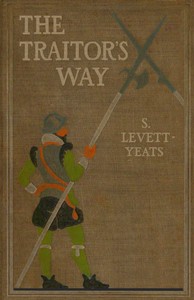
The traitor's way — Story, Setting & Ideas
(6 User reviews)
927
Project Gutenberg
2022
Not confirmed
Historical fiction; France -- History -- 16th century -- Fiction
Readers of public-domain and historical texts
Project Gutenberg digital edition
en
Edition facts
Words
82,876
Reading time
361 min
Text sections
26
The traitor's way — Story, Setting & Ideas can be approached with a clearer sense of reading commitment from its source measurements: 82,876 words, 6 hr 1 min estimated reading time, and 26 detected text sections.
The text analysis averages about 18.2 words per sentence, while the detected sections provide another way to judge how the source is divided.
Project Gutenberg metadata also associates the work with “Historical fiction,” connecting these edition facts with the source record’s subject description.
Source:
Project Gutenberg record #68914
A first-person narrative from Gaspard de Vibrac, a self-proclaimed traitor in 16th-century France, whose confessional tone and shifting loyalties drive a tale of political intrigue, love, and shame.
Editorial Edition Score
4.9/5
★★★★★
★★★★★
Calculated from edition completeness, EPUB availability, text structure and catalogue metadata. Not a user rating.
How this score is calculated
- Description quality20 pts
- Title & short description10 pts
- Source metadata20 pts
- Text length15 pts
- Chapters / structure15 pts
- EPUB file integrity20 pts
Total of 100 points, scaled to a 2.5-5.0 range. Editions with an empty description or a missing EPUB file are not scored.
Edition quality
Read the Text
“Not now,” she whispered, and my arm dropped to my side, and we stood gazing at each other, two wandering souls that had passed out into the unknown seas. At last she spoke again, her words coming slowly and with an effort.
“You will never regret, Vibrac? Will you?”
“My queen! Can you ask?” And bending low I touched her hand with my lips. She drew back once more quickly, and pulling her hood up, held the folds at her neck with her hand as she said:
“I must go--let me go now.”
“Until compline--and you will be at the wicket gate?”
She but bent her head in reply, and turned as if to go. It was at this moment that we heard voices in the corridor outside, and then a hurried knocking at the door. Marie ran back to my side with a little gasp.
“They are come to take you--oh, Vibrac!”
But there was no tread of spurred heels, no clash of arms, only that insistent knocking, and then a voice:
“Vibrac! Vibrac! It is I--Marcilly!”
We two but glanced at each other, a guilty shrinking glance. Then springing forward, I took Marie by the arm, and almost dragged her across the room to where a curtained archway separated my study from a dressing-room.
“In there! Quick!” I whispered; “open the door beyond, and go out by the private way; I will stop him here.”
She fled through the passage, and letting the curtain fall I walked up to the door with a trembling heart, and drew back the bolt, to find Marcilly before me, with Badehorn standing behind him, a look of alarm in his face.
“You! In Paris!” I exclaimed.
“Not by my own will,” he laughed grimly; “but, thanks to this dress, I am still safe,” and then for the first time I noticed that he was clad in the black and yellow of Guise.
“Let no one interrupt us, Badehorn,” I said; and with an affected cordiality--I seemed to learn without effort to play the hypocrite--I took Marcilly’s arm and drew him within whilst he continued talking.
“I had this dress ready for an emergency, and actually helped to batter in my own doors. Then seeing a chance of getting away I slipped up here, where I knew I would be safe for an hour or so,” and with these words he flung himself into the chair near the window, and began playing with the glove I had left on the table.
Sick at heart as I was with the fear that he would recognize the glove, I could not help, even then, noticing the extraordinary resemblance that he bore to the Prince of Condé, the secret chief of our conspiracy, a resemblance that had given Marcilly the nickname of “The Shadow of Condé.” And as I stared at him he glanced up at me, running his eyes over my gay court dress.
“You are safe as yet, I see,” he said, “and have time for these things,” and he flicked the glove from side to side.
“I leave Paris to-night. I am no longer safe.”
“Then we will go together and join the Prince. It must be open war now. Thank God! The Cardinal is a poltroon, and has lost his head, else they would have trapped us like rabbits--but there are still some men amongst the Guisards, and they may be here any moment. Come!” And he started up, the glove still in his hand. “Let us be off!”
For an instant I knew not what to say; then recovering myself with an effort I told him: “I will meet you at compline--at the Porte St. Victor.” It was the gate opposite to that by which I meant to leave Paris.
“At compline! Between this and compline we may have lodgings in the Châtelet--what bee have you got in your head to stay here now?”
Unconsciously my eyes fell on the glove in his hand, and following my glance he jumped to a conclusion.
“I see,” he said with a bitter laugh, “this trifle! A pretty toy,” and then, looking at it curiously, “’tis almost small enough to fit her hand.”
Did the man suspect or know? Was he trifling with me? For the moment I thought he was, and watched him with a new-born cowardice in my heart. Even as I did so I thought I heard a movement in the room within, and glanced round with a guilty start. Surely Marie had not stayed? It could not be! And then I turned again to Marcilly. He had not observed that start and backward look. He was staring at the glove in his hand.
The novel opens with a striking first-person confession: “I suppose there is no man who would care to have sunlight in all his life; but I hardly think there is one who could have sunk to the deep as I did, and yet have been coward enough to live, as I do—I, Gaspard de Vibrac.” This immediate plunge into a guilt-ridden voice sets the tone for a narrative that oscillates between self-laceration and action. The speaker’s shame is embodied in the “four white stars on my shield” that “seem to burn red” with memory. The opening chapter, titled “Sowing The Winds,” establishes a retrospective frame—forty years after the events—while the story quickly moves into the tense political world of Catherine de Medici’s court.
A Confessional Voice and Its Shifts
The narrator, Gaspard de Vibrac, speaks directly to the reader in a tone that is both intimate and theatrical. His opening lament—“Thank God! I am the last of my house!”—reveals a man consumed by a past betrayal. Yet within the same chapter, the voice shifts to a more conventional third-person omniscience when describing other characters’ actions. This alternation creates a layered effect: the reader is inside Vibrac’s anguished mind during his soliloquies, but outside during scenes of political maneuvering. For instance, when Catherine de Medici says, “The very tapestry in this room has eyes and ears—aye! and tongues too!” the narrative pulls back to observe her performance. The contrast between Vibrac’s raw self-accusation and the controlled dialogue of courtly intrigue suggests a deliberate pacing of emotional intensity versus calculated plot advancement.
The Rhythm of Intrigue and Revelation
The excerpts reveal a narrative that alternates between rapid, whispered conspiracies and moments of frozen realization. In the scene with Catherine, the dialogue is clipped and urgent: “Quick!” I whispered; “open the door beyond, and go out by the private way.” The characters speak in short, breathless exchanges, and the Queen’s responses are layered with double meanings. Yet the pace slows abruptly when Vibrac overhears Marie’s “glad cry” for Jean: “it stabbed me like a knife.” Here the prose becomes introspective, dwelling on the narrator’s emotional collapse. This structural rhythm—from swift action to paralyzing insight—mirrors the theme of betrayal, as political plots and personal deceptions unfold at different speeds. The chapter titles themselves, such as “The Parting of the Ways” and “The Shame of Vibrac,” hint at pivotal moments where the narrative tempo changes.
Recurring Motifs of Sight and Surveillance
Throughout the excerpts, eyes and watching are emphasized. Vibrac describes his shield’s stars “burning red” as if they witness his shame. Catherine warns that “the very tapestry has eyes and ears,” and later she “glanced at me for a moment” before turning to Marcilly. The narrator himself becomes an observer of his own downfall: “I felt—I cannot tell why—that the love I thought mine was never mine.” This motif of being seen—or seeing too late—creates a sense of paranoia and inevitability. The setting of the château, with its “long corridors” and “silent rooms,” reinforces isolation and the weight of a watchful past. The word “traitor” recurs not only in the title but in the characters’ accusations and self-judgments, binding the visual imagery to the theme of loyalty and exposure.
Readers should attend to the interplay between Vibrac’s retrospective shame and the present-tense action of the plot. The narrator’s unreliability—his claim to be “the blackest of traitors” even as he recounts his own naivety—invites skepticism. The novel’s pacing rewards patience: moments of swift dialogue give way to long interior monologues. Pay attention to chapter titles, which often signal shifts in perspective or tempo, and to the recurring imagery of eyes and walls that speak.
I finished The Traitor’s Way feeling like I’d sat too long in someone else’s shame, the way Gaspard’s voice stays with you after the confession ends. That same lingering weight, that quiet unease about what we carry and hide, is what I felt reading Gleaner Tales — Inside the Classic. It’s less a story than a memory of one, and it hasn’t left me.
Oliver Garcia
1 month agoLuke Anderson
1 month agoAlexander Torres
1 month agoLucas Carter
2 weeks agoThere are no comments for this eBook.
Reader reflection
How did this book work for you?
Your answers remain private and are stored only in this browser.
Your progress
0
/
10
2
What was your overall reaction to the book?
3
Is this a title you would suggest to others?
4
How much effort did this book require?
5
Would you like to discuss this book with someone?
6
Would you read this book again?
7
Did anything about the book feel genuinely new?
8
What did you think about the pace?
9
What did this book teach you most?
10






Luke Hernandez
1 month ago