1

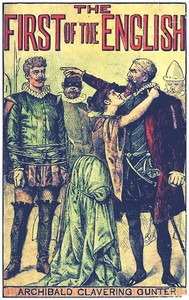
The First of the English: A Novel — Themes and Context
(11 User reviews)
2749
Project Gutenberg
2022
Not confirmed
Historical fiction; Netherlands -- History -- Eighty Years' War, 1568-1648 -- Fiction
Readers of public-domain and historical texts
Project Gutenberg digital edition
en
Edition facts
Words
103,159
Reading time
449 min
Text sections
26
The source record for The First of the English: A Novel — Themes and Context measures this digital text at 103,159 words, 7 hr 29 min estimated reading time, and 26 detected text sections.
The text analysis averages about 17.5 words per sentence, while the detected sections provide another way to judge how the source is divided.
Project Gutenberg metadata also associates the work with “Historical fiction,” connecting these edition facts with the source record’s subject description.
Source:
Project Gutenberg record #67804
Archibald Clavering Gunter's 1895 novel follows English captain Guy Stanhope Chester through Antwerp during the Eighty Years' War, using recurring images of water, smuggling, and surveillance to structure a tale of love and conflict.
Editorial Edition Score
4.9/5
★★★★★
★★★★★
Calculated from edition completeness, EPUB availability, text structure and catalogue metadata. Not a user rating.
How this score is calculated
- Description quality20 pts
- Title & short description10 pts
- Source metadata20 pts
- Text length15 pts
- Chapters / structure15 pts
- EPUB file integrity20 pts
Total of 100 points, scaled to a 2.5-5.0 range. Editions with an empty description or a missing EPUB file are not scored.
Edition quality
Read the Text
ss the word for the boatswain. He has the best nose on board this ship,” shouts Captain Guy Stanhope Chester.
This being done, the young skipper, for he is hardly twenty-five, shaking the spray and sea water out of his tarpaulin, gropes his way to the binnacle, the lantern of which is shaded, partly to protect it from the weather and partly to prevent its light giving indication of the vessel’s whereabouts through the darkness of the night.
Taking the course of the vessel he glances at the two men lashed by the tiller to prevent their being washed overboard by the waves that have been chasing the ship ever since she left the white cliffs of England, and remarks: “Better cast yourselves loose lads, we are in quieter water now. There’s a bit of Flanders between us and the worst of the gale.”
A moment after the boatswain makes his appearance, a weather-beaten old tar of England; one of the new class of deep-water sailors that are being made by Drake and Frobisher in voyages to the Spanish Main and far Pacific. Plucking a grisly lock, this worthy, who would be all sea dog did he not wear a battered, steel breast-plate, salutes his captain, who says:
“How long since we passed Flushing, Martin Corker?”
“About four bells, your honor.”
“Two hours! I make it the same. Could you distinguish the place with your eye, boatswain?” asks Guy, clutching the mizzen rattlings of the Dover Lass, as she lurches before the northwest gale and rising tide.
“Not on this dark night, sir; but I made out the soundings by my lead, the land with my eye, and the slaughter houses on the shore with my nose.”
“So did I,” laughs Captain Chester. “You and I, Martin, have been up the Schelde often enough to nose out the channel on as dark a night as this, though the cursed Spaniards have torn up every buoy on the river.”
Then the young skipper, leading the first officer aside, continues very seriously and with knitted brows: “No chance of our meeting any of Alva’s galleys out in this chop sea on such a night as this.”
“No,” growls Dalton, “these Spanish lubbers are fair weather sailors.”
“Besides, in such a gale,” adds the captain, “the Dover Lass would make a fool of the bravest and biggest Spanish galleon that ever wallowed through the ocean;” and he looks with the pride and love of a sailor at the trim little ship, upon whose quarter-deck he stands, as she dashes through the waves of the Schelde estuary, tossing the water that comes over her bow gracefully into her lee scuppers, with the South Beveland on her lee and Flanders on her weather quarter.
But the night is so inky and the spray so blinding, Guy Chester’s sharp eyes can only discern half of his trim little vessel of about a hundred and thirty-five feet long, and two hundred and fifty tons burden, rigged in a fashion peculiar to the times of Queen Elizabeth of England, with three masts, the main and the fore square-rigged, and the mizzen felucca-like, with a long lateen yard, from which would be expanded a fore and aft spanker, were not the vessel under storm canvas.
Below this top-hamper the Dover Lass shows on her decks as pretty a set of snarling teeth as any vessel of her size that sails from the shores of merry England—six long demi-culverins throwing nine-pound balls, on each broadside; four minions on her quarter-deck, three falcons as murdering pieces on her forecastle, and half a dozen serpentines mounted as swivels at convenient places on her bulwarks, which are unusually low for a vessel of that day. In this matter of cabins and bulwarks the Dover Lass is rather an anomaly, carrying no high poop nor forecastle, and consequently able to beat to windward with much greater facility than the ordinary ships of the sixteenth century.
Round the butts of her masts in racks are quantities of cutlasses, boarding pikes and battle axes; the arquebuses and pistols being kept by the armorer in the forecastle or in the captain’s cabin.
Her crew, some hundred and twenty-five of as jovial sea dogs as ever cut a throat or scuttled a ship, are out of their hammocks to-night, every man Jack of them; lying in as comfortable places as they can find between the guns on the weather side of the deck and cracking sailor-jokes with each other in a manner unusual to a government cruiser.
The novel opens with a flood on the Schelde, immediately establishing water as a central image. Captain Guy Stanhope Chester, barely twenty-five, navigates his ship through darkness and spray, his lantern shaded to avoid detection. This maritime setting recurs throughout, from smuggling operations under false flooring to a battle on skates. The text moves between shipboard tension and urban intrigue, with the captain shuttling between his vessel, an artist's studio, and the warehouses of Antwerp. The structure relies on these physical transitions—from sea to shore, from public quay to secret hold—to propel the narrative forward.
Water as a Recurring Element
The Schelde flood in the first chapter is not merely a backdrop; it introduces a pattern of water-related imagery that surfaces repeatedly. Guy shakes spray from his tarpaulin, waves chase the ship, and later, a battle takes place on skates. The river itself becomes a character, shaping the plot's movement. Even the smuggling operation is tied to the tide: the moon goes down at ten, and the hour for unloading is set for eleven. This attention to the water's rhythms gives the story a tangible, physical pulse.
The Smuggling Episode and Its Structural Role
In the excerpt, Guy discovers twelve cases of goods hidden under his cabin's false flooring. The consignee, Jan Olins, instructs him to unload them late at night, calling it “avoiding the tenth penny.” Guy's reaction—opening a case, then whistling softly with respect—hints at the cargo's nature without revealing it. This episode is a pivot: it ties the maritime setting to the city's underground economy and raises stakes for the protagonist. The structure of the novel, with its chapter titles like “The Secret of the Statue” and “The Duke’s Unlucky Penny,” suggests that such clandestine transactions are central to the plot.
Surveillance and Hidden Observation
Guy's movements are constantly watched. The boatswain mutters Spanish words to avoid detection, and the crew fears being burned alive. Guy himself spies on the painter's studio, drawing a curtain to gaze at a portrait. The dove cote, with its six pigeons and no letters, implies a failed communication network. These details create a world where nothing is straightforward: characters look over their shoulders, whisper behind closed doors, and read hidden meanings into everyday objects. The novel's structure mirrors this paranoia, with scenes alternating between open action and covert planning.
Movement Between Spaces
The narrative shuttles between three primary locations: the ship, the artist's studio, and the city's warehouses. Each space has its own rules. On the ship, Guy commands; in the studio, he gazes at art; in the warehouse, he negotiates with Olins. The chapter titles reinforce this mobility: “A Strange Trip to Antwerp,” “The Lady of the Barge,” “The Drinking Bout at the Painted Inn.” The reader is never allowed to settle, mirroring the protagonist's restless energy. This constant movement—from sea to shore, from public to private—gives the novel a cinematic quality, even as it remains rooted in the 16th-century setting.
Readers should attend to the way Gunter uses physical objects—a statue, a penny, a dove cote—as narrative hinges. The excerpts suggest that these items are not decorative but functional, driving the plot forward. The novel rewards attention to detail, especially in scenes where characters move between light and shadow, speech and silence. The Eighty Years' War provides a backdrop, but the real drama lies in the spaces between official history: the smuggler's hold, the painter's studio, the locked cabin.
Reading about Chester’s silent watch over Antwerp’s canals, I remembered a rainy afternoon, the same held breath of secrecy. The Crystal Cup — Reading Companion once gave me that identical pause—a story waiting underneath the surface, like water under a lid. Not the action, but the quiet space between one ripple and the next, where everything feels possible.
There are no comments for this eBook.
Reader reflection
How will you remember this book?
Save your reaction, strongest insight, and memorable passage.
Your progress
0
/
10
2
How much did you enjoy the reading experience?
3
Would you encourage someone else to read it?
4
What was the reading difficulty like?
5
Would you start a conversation about this book?
6
Which part made the strongest impression?
7
How strongly did the book affect you emotionally?
8
Could you see yourself revisiting this book?
9
Which lesson or insight stayed with you?
10








Avery Scott
4 weeks ago