About 361 minutes
The traitor's way — Story, Setting & Ideas
Historical Psychological Social Fiction
82,876 recorded words. 8 minutes difference from this book's estimate.
View Gutenberg source #68914
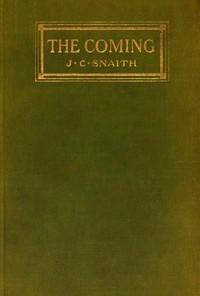
The catalog record for The coming — Inside the Classic provides practical reading context through 81,059 words, 5 hr 53 min estimated reading time, and 49 detected text sections.
The text analysis averages about 15.6 words per sentence, while the detected sections provide another way to judge how the source is divided.
Project Gutenberg metadata also associates the work with “Villages -- England -- Fiction,” connecting these edition facts with the source record’s subject description.
Explore this collection
These alternatives are selected using recorded categories and estimated reading time.
About 361 minutes
Historical Psychological Social Fiction
82,876 recorded words. 8 minutes difference from this book's estimate.
View Gutenberg source #68914About 341 minutes
Historical Psychological Social Fiction
78,382 recorded words. 12 minutes difference from this book's estimate.
View Gutenberg source #69105About 340 minutes
Historical Psychological Social Fiction
77,988 recorded words. 13 minutes difference from this book's estimate.
View Gutenberg source #67611Search stored excerpts and compare books → Choose by your preferences →
Choices use stored catalog measurements. Estimates vary with reading speed. A shared category is a catalog label, not a claim that two books have the same argument or literary quality.
Search reads excerpt text stored with this catalog and links to its associated Gutenberg record. The connection is stored in the site database; this tool does not recheck that every excerpt is word-for-word identical to that external record. Excerpt search does not cover every chapter and does not verify historical publication dates.
Catalog snapshot checked: 2026-09-26. Coverage: 95 public books, 95 available source excerpts.
Calculated from edition completeness, EPUB availability, text structure and catalogue metadata. Not a user rating.
Total of 100 points, scaled to a 2.5-5.0 range. Editions with an empty description or a missing EPUB file are not scored.
Public-domain source text
The source text is kept in the dedicated reader, separate from this catalogue record and its commentary.
The novel opens with the vicar of Penfold, Mr. Perry-Hennington, struggling to write a sermon in June 1915, his Saturday mornings now a 'symbol of torment' since the war began. The narrative voice is wry and specific, noting that the vicar's God 'spoke with the accent of an English public school' and used the language of Pusey and Westcott. This early passage establishes a pattern: the story moves between interior doubt and external events, using the village as a microcosm for larger questions about faith, authority, and the nature of the 'coming' hinted at in the title.
The setting of Penfold, a hamlet on the Sussex-Kent border, is rendered with precise social detail. The vicar's stipend of eight hundred pounds a year, his Oxford pass degree, and his forty-year habit of reading old sermons on Sunday mornings all mark a world of settled hierarchies. Yet the war has cracked this surface. The narrative repeatedly returns to the tension between routine and disruption: the vicar's weekly sermon-writing becomes a 'nightmare'; the local doctor, Joliffe, finds himself caught between professional duty and personal unease. The excerpts show a community where every character is measured by their response to the crisis, from the vicar's public rebuttals in the press to the doctor's cautious diplomacy.
John Smith appears only through the reactions of others in the provided text. To Brandon, a patient confined to bed, Smith is 'the first spirit of the age' and a cause for obsessive concern: 'He's in my mind night and day.' To Dr. Joliffe, Smith is a 'most unhappy subject' whose case brings 'ever-increasing embarrassment.' The language around Smith is consistently that of diagnosis and judgment: he is 'on the border line,' and the question of certification becomes a legal and moral tangle. The novel uses Smith as a catalyst, forcing characters to reveal their assumptions about sanity, authority, and the possibility of something new entering a closed world.
The excerpts are threaded with images of clouds, specters, and judgment. The vicar's doubt is 'a cloud no bigger than a man's hand'; the war is a 'dark specter' in his mind. Brandon speaks of 'our local Shallows sitting in judgment' and calls the situation 'an old story being retold with a few modern improvements.' The novel's structure seems to hinge on these moments of scrutiny: the vicar's self-examination, the doctor's professional assessments, the implied legal proceedings. The language of the courtroom and the confessional overlaps, as characters weigh evidence and conscience. The recurring phrase 'in order to save trouble'—used by the doctor about the certification process—echoes the vicar's earlier ease, now lost.
The narrative shifts between the vicar's private thoughts and the charged dialogues of the sickroom. The opening passage is largely interior, tracking the vicar's mental state with a free indirect style that blends his voice with the narrator's. Later, the scene between Brandon and Joliffe is almost entirely dialogue, with the doctor's 'mellifluous' tones contrasting with Brandon's 'hectic' excitement. This alternation creates a rhythm of introspection and confrontation. The excerpts suggest that the novel's movement is not linear but oscillating: from the vicar's study to Brandon's bedroom, from private doubt to public argument, from the past of 'thirty-five years' of comfortable faith to the present of 'a profoundly stupid man' and a world at war.
Readers should attend to how Snaith uses the village setting not as pastoral backdrop but as a pressure chamber. The recurring motifs of judgment—medical, legal, spiritual—invite attention to who speaks and who is silenced. The incomplete excerpts leave open whether John Smith is a person, a symbol, or both; the novel's structure rewards careful tracking of how each character's language reveals their position. The war remains a constant, unspoken presence, shaping every decision and doubt.
That grey afternoon, Penfold’s whispered doubts stayed with me long after the rain stopped, and I found myself drifting toward gentler, older voices. There is a quiet comfort in that village's patient struggle, a thing that reminded me, almost by accident, of another countryside’s collected sorrows. The same weather seemed to hang over Gleaner Tales — Inside the Classic, as if these stories shared one long, drizzling light.
Save your reaction, strongest insight, and memorable passage.