About 159 minutes
The Memoirs of a Failure: with an Account of the Man and His Manuscript — Reading Companion
Fantasy Juvenile Worlds
36,368 recorded words. 19 minutes difference from this book's estimate.
View Gutenberg source #67204
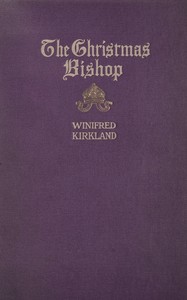
For The Christmas Bishop — A Closer Reading, the stored edition analysis reports 32,162 words, 2 hr 20 min estimated reading time, and 8 detected text sections.
The text analysis averages about 15.3 words per sentence, while the detected sections provide another way to judge how the source is divided.
Project Gutenberg metadata also associates the work with “Christmas stories,” connecting these edition facts with the source record’s subject description.
Explore this collection
These alternatives are selected using recorded categories and estimated reading time.
About 159 minutes
Fantasy Juvenile Worlds
36,368 recorded words. 19 minutes difference from this book's estimate.
View Gutenberg source #67204About 96 minutes
Fantasy Juvenile Worlds
22,060 recorded words. 44 minutes difference from this book's estimate.
View Gutenberg source #67562About 77 minutes
Fantasy Juvenile Worlds
17,661 recorded words. 63 minutes difference from this book's estimate.
View Gutenberg source #67475Search stored excerpts and compare books → Choose by your preferences →
Choices use stored catalog measurements. Estimates vary with reading speed. A shared category is a catalog label, not a claim that two books have the same argument or literary quality.
Search reads excerpt text stored with this catalog and links to its associated Gutenberg record. The connection is stored in the site database; this tool does not recheck that every excerpt is word-for-word identical to that external record. Excerpt search does not cover every chapter and does not verify historical publication dates.
Catalog snapshot checked: 2026-09-26. Coverage: 95 public books, 95 available source excerpts.
Calculated from edition completeness, EPUB availability, text structure and catalogue metadata. Not a user rating.
Total of 100 points, scaled to a 2.5-5.0 range. Editions with an empty description or a missing EPUB file are not scored.
Public-domain source text
The source text is kept in the dedicated reader, separate from this catalogue record and its commentary.
The narrative opens with a poet-bishop awake before dawn, his mind racing with pictures that fall into the march of a poem. Kirkland renders his vision of a silent, gray city where a barefoot child knocks on doors, met only with sobbing. This internal tableau—a sacred city without stars, a child seeking welcome—establishes the bishop's longing and isolation before he steps into Westbury's Christmas morning.
When the bishop walks the streets, the external world feels alien: motor cars flash by, groups laugh, but he is "wistful and alone as a lost child." The simile echoes the vision's child, linking his inner and outer experience. At Lucy Hollister's door, the narration shifts to precise domestic details—a brown old footman, a hall that shows the river through broad glass—and crisp dialogue that hints at unspoken worry.
Kirkland gives the bishop a poet's habit of thinking in pictures, especially in the "strangely alert moments between sleep and full awakening." The opening vision is not merely decorative; it is a compressed narrative of rejection and yearning. The child "pattered over the pavement," his pale hair streaming, his hands "stretched out showed fair as a baby's." The city is described through absence—no sound, nothing that moves—yet the reader knows it throbs with life. This technique of rendering stillness and suppressed motion recurs when the bishop stands on the Christmas street, feeling himself a stranger among the gay throng. The authorial choice to embed a poem-like sequence within prose gives the bishop's interiority a formal, almost liturgical weight.
Lucy Hollister's speech is marked by crispness and indirection. When the bishop asks if he missed the service, she replies, "It was not Christmas without your sermon. Otherwise it was—well, a service." The pause before "well" and the qualification "a service" imply disappointment without stating it. Later, when she asks about the rector's illness, she adds, "And of what sickness? Too much Westbury?"—a pointed remark that the bishop's troubled glance deflects. Their exchange about counting Christmases is similarly layered: Lucy says, "I do not count them," then adds to herself, "those that are over!" The narration reports the aside without comment, leaving the reader to gauge her grief. Kirkland uses dialogue to reveal character through what is left unsaid.
Lucy's house is described as a repository of custom: the same wall paper with a French hunting scene, the same china and silver, the same gray river beyond the windows. The narration notes that "Lucy kept every custom Westbury had had in her youth, and she made other people keep such custom, too." The repetition of "same" accumulates, suggesting stasis. The bishop remembers dining at that table as a college lad, and the room has not altered. Yet the dialogue hints that this preservation may be a form of resistance. When Lucy says, "if it is really Christmas—here!" the conditional "if" undercuts the festive setting. Kirkland uses material details—the racing hunt scene on the wallpaper, the unchanged menu—to frame a tension between continuity and loss.
Kirkland repeatedly compares the bishop to a child. On the street he is "as wistful and alone as a lost child." His feet carry him toward Lucy's door "with the homing instinct of a child that knows one door its own." The vision's child—barefoot, pale, sobbing—mirrors the bishop's own emotional state. Lucy, by contrast, moves with "the sinuous grace of her girlhood" despite her many Christmases. The bishop's vulnerability is emphasized through physical description: his blue eyes are vague, he leans his head back and closes his lids, minutes tick while Lucy watches. These similes and gestures build a portrait of an old man whose inner life is more vivid than his outer circumstances, and whose need for welcome echoes the child's fruitless knocking.
Readers attentive to Kirkland's craft will notice how she layers the bishop's poetic vision over the realistic Christmas setting, creating a double exposure of longing and custom. The dialogue rewards close attention: Lucy's clipped remarks and the bishop's distracted replies carry more meaning than their surface. The excerpts offer a concentrated study in how a writer can use a single day—and a single character's consciousness—to explore themes of belonging, memory, and the gap between inner and outer worlds.
That blue-black dawn lingered with me all afternoon, the bishop’s quiet ache for a child’s trust settling somewhere soft. Rain kept tapping the window, and I found myself drifting to another small life, equally unspoken. There’s a particular loneliness in both—the squirrel’s patient gathering, the bishop’s unanswered questions. It wasn’t planned, just theft of a rainy hour: The life story of a squirrel — A Closer Reading feels like the same silence, but wilder.
Save your reaction, strongest insight, and memorable passage.