About 77 minutes
Where Stillwater Runs Deep — Context and Discussion
Fantasy Juvenile Worlds
17,661 recorded words. 20 minutes difference from this book's estimate.
View Gutenberg source #67475
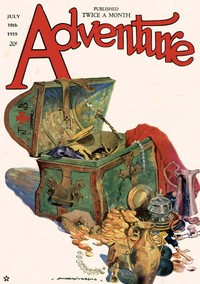
For A Prevaricated Parade — Background and Themes, the stored edition analysis reports 13,006 words, 57 min estimated reading time, and 2 detected text sections.
The text analysis averages about 13.9 words per sentence, while the detected sections provide another way to judge how the source is divided.
Project Gutenberg metadata also associates the work with “Western stories,” connecting these edition facts with the source record’s subject description.
Explore this collection
These alternatives are selected using recorded categories and estimated reading time.
About 77 minutes
Fantasy Juvenile Worlds
17,661 recorded words. 20 minutes difference from this book's estimate.
View Gutenberg source #67475About 96 minutes
Fantasy Juvenile Worlds
22,060 recorded words. 39 minutes difference from this book's estimate.
View Gutenberg source #67562About 140 minutes
Fantasy Juvenile Worlds
32,162 recorded words. 83 minutes difference from this book's estimate.
View Gutenberg source #68590Search stored excerpts and compare books → Choose by your preferences →
Choices use stored catalog measurements. Estimates vary with reading speed. A shared category is a catalog label, not a claim that two books have the same argument or literary quality.
Search reads excerpt text stored with this catalog and links to its associated Gutenberg record. The connection is stored in the site database; this tool does not recheck that every excerpt is word-for-word identical to that external record. Excerpt search does not cover every chapter and does not verify historical publication dates.
Catalog snapshot checked: 2026-09-26. Coverage: 95 public books, 95 available source excerpts.
Calculated from edition completeness, EPUB availability, text structure and catalogue metadata. Not a user rating.
Total of 100 points, scaled to a 2.5-5.0 range. Editions with an empty description or a missing EPUB file are not scored.
Public-domain source text
The source text is kept in the dedicated reader, separate from this catalogue record and its commentary.
The story opens with a committee of four—Hank Padden, old man Whittaker, “Scenery” Sims, and narrator Henry Clay Peck—perched on a corral top, debating whether the Fourth of July merits celebration. Hank reads from a dictionary, and the group unanimously agrees it does. The scene immediately establishes a comic, oral tone: Scenery’s “squeakiest voice ever anchored in the throat of a human being” and Muley Bowles’s spontaneous poetry set the stage for a series of mishaps. The narrator’s self-deprecating voice—claiming he “lowers himself” punching cows—frames the tale as a humorous, exaggerated account.
The excerpts show a pattern of interrupted speech and physical comedy. When Muley asks about the committee’s conclusion, Scenery snaps back, and Muley responds with a verse. The narrator’s commentary—calling Muley a “cracking good poet” who “essayed to punch cows”—adds a layer of ironic distance. The scene on the corral top, with the pole bending under Muley’s weight, sets a tone of absurdity that carries through the story.
The humor relies on Henry’s deadpan narration and the contrast between his cowboy skills and the automobile’s mechanics. He discovers a “little jigger” that makes the machine speed up, and the mesquite flies past. The scene culminates in a collision with old man Whittaker, who fires a six-gun in response. Henry hides behind a tree while Whittaker mistakes Chuck for a victim, lamenting, “This ain’t no way to celebrate nohow.” The excerpts end with Henry restarting the machine, narrowly avoiding disaster.
The excerpts reveal Whittaker’s character through his speech: he is hot-tempered, easily confused, and prone to blaming his mule. Henry’s observation that the old man “pilgrims off up the road” emphasizes the absurdity. The scene reinforces the story’s reliance on verbal humor and physical comedy, with Whittaker’s six-gun and the mule serving as props. The narrator’s detached tone keeps the episode light, even as Whittaker believes he has killed someone.
The tall-tale quality is evident in the physical details: the machine’s front end against a rock, the brake not set, and Henry’s feet over the dashboard. The story’s structure—a committee investigating the Fourth of July—is a pretext for a series of comic disasters. The excerpts do not reveal the parade’s outcome, but the title “A Prevaricated Parade” hints at further fabrications. Henry’s voice, with its mix of cowboy lingo and literary flourishes, drives the humor.
Readers should approach this story as a comic tall tale rather than a realistic western. The excerpts suggest a loose plot built around the committee’s preparations, but the focus is on character voices and physical comedy. Henry’s narration rewards attention to his deadpan asides and exaggerated comparisons. The incomplete excerpts leave the parade itself a mystery, but the title promises more prevarication. Enjoy the ride.
There’s something about Henry’s stumbling parade—that whole glorious mess of good intentions and bad liquor—that stays with you. It reminds me of how certain stories just carry their own weather. I found a similar warmth, a similar sense of folks trying their best, in The Royal Regiment, and Other Novelettes — Text and Context. Some books simply feel like old company. That one does.
Use these questions to collect your thoughts before moving on.