1

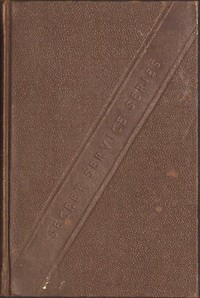
Clubfoot the Avenger Being some further adventures of Desmond Oakwood, of the Secret Service — Context and Discussion
(10 User reviews)
2097
Project Gutenberg
2021
Not confirmed
Spy stories; English fiction -- 20th century
Readers of public-domain and historical texts
Project Gutenberg digital edition
en
Edition facts
Words
53,581
Reading time
233 min
Text sections
8
For Clubfoot the Avenger Being some further adventures of Desmond Oakwood, of the Secret Service — Context and Discussion, the stored edition analysis reports 53,581 words, 3 hr 53 min estimated reading time, and 8 detected text sections.
The text analysis averages about 13.4 words per sentence, while the detected sections provide another way to judge how the source is divided.
Project Gutenberg metadata also associates the work with “Spy stories,” connecting these edition facts with the source record’s subject description.
Source:
Project Gutenberg record #65416
Valentine Williams's Clubfoot the Avenger opens with a framed narrative, introduces the villain Clubfoot through tense dialogue, and uses a distinctive editorial voice that shapes the reader's encounter with Desmond Okewood's secret service adventures.
Editorial Edition Score
4.7/5
★★★★★
★★★★★
Calculated from edition completeness, EPUB availability, text structure and catalogue metadata. Not a user rating.
How this score is calculated
- Description quality20 pts
- Title & short description10 pts
- Source metadata20 pts
- Text length15 pts
- Chapters / structure15 pts
- EPUB file integrity20 pts
Total of 100 points, scaled to a 2.5-5.0 range. Editions with an empty description or a missing EPUB file are not scored.
Edition quality
Read the Text
oms of his trousers are wet. But they’re not _splashed_. Look at mine after walking only across from the station!”
He showed a spray of mud stains above the turn-up of his blue serge trousers.
“And see here!” he added. He bent down and undid the dead man’s overcoat. Beneath it jacket and waistcoat were open and the unbuttoned shirt showed a glimpse of clean white skin.
“That’s not the skin of a tramp!” the detective declared.
Again Desmond Okewood gave the young man one of his enigmatic looks. Then he turned to the doctor.
“When a man dies of strychnine poisoning,” he said, “death is preceded by the most appalling convulsions, I believe?”
“Quite right!” the doctor assented, blinking through his _pince-nez_.
“One would, therefore, look for some signs of a struggle,” Desmond continued, “especially in a confined space like this. But see for yourself! The body lies stiffly stretched out, the feet on the floor, the top of the head touching the back of the hood, the shoulders all but clear of the seat. Not even the mat on the floor is disturbed.”
“Very singular, I must admit,” observed the doctor.
“The man who found the body says it was covered up with the rug. Isn’t that right, Jake?”
“Quite right, sir,” chanted the washer. “Covered up ’e wor, ’cept for ’is foot as stuck art!”
“It strikes me as odd,” remarked Desmond mildly, “that, in such ghastly convulsions as strychnine poisoning produces, this man had sufficient presence of mind to arrange the rug neatly over himself”—he paused and looked round his audience—“in such a way as to delay discovery of the body as long as possible!”
“By George!” said O’Malley excitedly—he was young enough to be still enthusiastic—“you mean to say you think he was brought here dead!”
Without replying Desmond turned again to the open door of the car. He took the policeman’s lamp and turned it on the distorted features of the dead man, the jet-black eyebrows and hair.
“Do you see anything on the right ear?” he asked.
“Yes,” O’Malley replied. “Looks like soap or something!”
“It is soap,” he said, “shaving soap,” and opened his hand in the beam of the light. Two or three tiny blond curls and a number of short ends of blond hair lay in the palm.
“I found these down the dead man’s collar,” he explained. “So you see, O’Malley, that your first impression that there is ‘something funny’ about this tramp was perfectly correct!”
But the detective only looked at him in a puzzled way. Desmond pushed him forward to the open door of the car.
“Sniff, man!” he cried.
“Rum sort o’ smell!” said O’Malley, “but I don’t see . . .”
“Hair dye!” exclaimed Desmond.
In a flash the young detective whipped round.
“Then you mean . . .” he began.
“I mean that this dead man is not a tramp, but a person of some social standing; that in life he was not dark and clean-shaven, but fair with a blond moustache or, more probably, a blond beard, and that he did not crawl into this car to die, but was brought here dead in the Lancia. You can assume, if you like, that he shaved himself, dyed his hair, and dressed up as a tramp before taking poison, in order to conceal his identity, but you cannot assume that he killed himself here in this car. Someone brought the body here; therefore there was collusion in his suicide . . . if it _was_ suicide . . .”
O’Malley pushed his hat back from his brow and scratched his head.
“Murder, eh?” he remarked, addressing no one in particular.
A light footstep sounded on the cobbles behind the group, and a voice said:
“You’ve got my car back, then?”
CHAPTER II ENTER MISS VERA SLADE
The two men turned about as a young girl, bareheaded, in a long ermine coat, slipped between them and laid her hand on the door of the Lancia. She was a dainty creature, very fashionably dressed, and little cloth-of-silver shoes peeped out from beneath the fringe of her white satin gown. Before they could stop her, she had pulled the car door wide. She gave one glance inside the cabriolet; then, with a little cry, she reeled back. Desmond Okewood caught her in his arms.
“It’s . . . it’s horrible!” she gasped. “What . . . who is that inside my car?”
A large policeman now lumbered up, panting.
The introduction immediately establishes a layered narrative: an unnamed editor claims to have pieced together the story from conversations with the Okewood brothers, citing golf links, tennis courts, and the Berkeley grill as settings for these talks. This framing device signals that the reader is receiving a carefully curated account, not a direct confession. The editor acknowledges Desmond's objection to his "incurable love of the dramatic" and Francis's remark that the interesting part of secret service yarns is what must be left out. This self-consciousness about storytelling becomes a lens for reading the entire book: the gaps and silences are as important as the action.
The Framed Narrative and Its Implications
The introduction presents the story as a collaborative reconstruction, with the editor acting as "Froissart of this chronicle." This choice affects how a first reader should approach the text: the narrative is not omniscient but filtered through a witness who admits to censorship and revision. The editor notes that the manuscript was "much-censored and revised" by the brothers, and that the whole truth about secret service matters can seldom be told. This creates an expectation of withheld information and deliberate gaps. Readers should watch for moments where the narrative seems to skip over details or where characters' motivations remain opaque—these may be artifacts of the framing rather than authorial oversight.
Clubfoot's Introduction Through Dialogue
The villain Clubfoot first appears in a scene of tense negotiation, described through physical details: "a hairy paw," "little pig eyes," and a voice that "went booming through the room." His dialogue reveals a calculating, almost amused menace: he counsels patience with Major Okewood, then threatens to "teach him manners." The scene establishes Clubfoot as a dominant personality who can silence a room with a pistol shot. Notably, the excerpt shows Clubfoot's control over his associates—Tarock, a former Austrian officer cashiered for theft, and the Jew Mandelstamm—through a combination of gentle rebuke and implied violence. This layered introduction suggests Clubfoot is both a physical threat and a psychological manipulator.
Desmond Okewood's Provocative Style
Desmond Okewood, despite being a prisoner, displays a reckless verbal aggression that defines his character. In the meeting scene, he goads Tarock by reciting his criminal history—cashiering, white-slave traffic, double-crossing as a spy—with cool deliberation. His tone is mocking and precise, using direct address ("Why, now, isn't that interesting?") and rhetorical questions. This behavior, while seemingly foolhardy, also serves as a tactic: it disrupts his captors' composure and gathers information. Readers should note how Desmond's dialogue often contains embedded intelligence—he knows Tarock's background, which implies prior knowledge or preparation. His provocations may be a deliberate strategy, not mere bravado.
The Role of Physical Detail and Setting
The excerpts are rich with sensory details that ground the espionage plot: the "ear-splitting report" of a pistol, the "fumes of burnt cordite," a prisoner with "close-cropped fair hair, now stiff with matted blood." Settings are sketched with minimal but effective strokes—a room with a table, a window-seat, a doorway where a man staggers in "his arms piled high with white and green canvas" bags. These details create a gritty, tactile world that contrasts with the more cerebral framing. The introduction's mention of locations like the Berkeley grill and the Senior smoke-room also establishes a social milieu of clubs and leisure, which may color the reader's expectations of the characters' backgrounds and alliances.
As you read, attend to the tension between the editor's polished reconstruction and the raw, violent episodes it contains. The narrative's self-awareness about its own omissions invites you to consider what might be hidden behind the scenes—whether in Clubfoot's schemes or in the Okewood brothers' unspoken knowledge. This is a story that rewards attention to its framing as much as its action.
This Clubfoot villain reminds me of evenings at my grandfather’s, his radio murmuring spy tales. We never had such thrillers at home, only nature books. I remember sitting cross-legged, tracing a squirrel’s path in The life story of a squirrel — A Closer Reading, feeling that same quiet cunning—creatures navigating danger with silent, careful steps.
Benjamin Sanchez
3 weeks agoMia Miller
1 month agoEvelyn White
4 weeks agoLiam Scott
1 month ago-

Ryan Wilson - 1 month ago
A thrilling and masterfully plotted espionage novel that keeps you guessing until the very end. Desmond Oakwood is a brilliant hero, and the authors (the writing team of Putnam and Roscoe) craft a world of spies, intrigue, and danger with remarkable flair. The pacing is taut, the twists are surprising, and the atmosphere is palpably tense. A must-read for anyone who loves classic espionage. -
Michelle Green - 1 month ago
A tedious rehash of the first book with none of the freshness or excitement. The plot is convoluted, the dialogue is overly dramatic, and the climax is absurdly convenient. The characters, particularly the women, are thinly drawn and serve only as plot devices. As a fan of the genre, I found this to be a disappointing entry. The secret service deserves better. -
Jacob Vincent Welch - 3 weeks ago
This sequel to the Clubfoot series delivers more of the adventurous spy action that fans expect. The plot is engaging and the character of Oakwood remains compelling, though the story borrows heavily from its predecessor. Some sections feel somewhat predictable, and the villain could have been more menacing. Still, it's an enjoyable read for devotees of early 20th-century espionage fiction.
Reader reflection
Before you leave, reflect on the book
Use these questions to collect your thoughts before moving on.
Your progress
0
/
10
2
How much did you enjoy the reading experience?
3
How likely are you to recommend this book?
4
What was the reading difficulty like?
5
How original did the book feel?
6
How clear did the writing feel?
7
How well did it match your expectations?
8
Would you like to discuss this book with someone?
9
In one sentence, what did you learn?
10




Joseph Miller
1 month ago