About 610 minutes
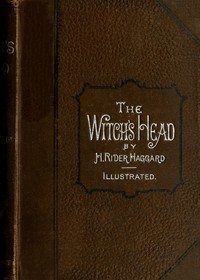
The Witch's Head — Text and Context
Fantasy Juvenile Worlds
140,095 recorded words. 156 minutes difference from this book's estimate.
View Gutenberg source #65998
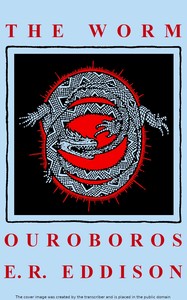
The source record for The Worm Ouroboros: A Romance — Text and Context measures this digital text at 176,067 words, 12 hr 46 min estimated reading time, and 41 detected text sections.
The text analysis averages about 21.8 words per sentence, while the detected sections provide another way to judge how the source is divided.
Project Gutenberg metadata also associates the work with “Fantasy fiction,” connecting these edition facts with the source record’s subject description.
Explore this collection
These alternatives are selected using recorded categories and estimated reading time.
About 610 minutes
Fantasy Juvenile Worlds
140,095 recorded words. 156 minutes difference from this book's estimate.
View Gutenberg source #65998About 605 minutes
Fantasy Juvenile Worlds
139,125 recorded words. 161 minutes difference from this book's estimate.
View Gutenberg source #66076About 591 minutes
Fantasy Juvenile Worlds
135,805 recorded words. 175 minutes difference from this book's estimate.
View Gutenberg source #66558Search stored excerpts and compare books → Choose by your preferences →
Choices use stored catalog measurements. Estimates vary with reading speed. A shared category is a catalog label, not a claim that two books have the same argument or literary quality.
Search reads excerpt text stored with this catalog and links to its associated Gutenberg record. The connection is stored in the site database; this tool does not recheck that every excerpt is word-for-word identical to that external record. Excerpt search does not cover every chapter and does not verify historical publication dates.
Catalog snapshot checked: 2026-09-26. Coverage: 95 public books, 95 available source excerpts.
Calculated from edition completeness, EPUB availability, text structure and catalogue metadata. Not a user rating.
Total of 100 points, scaled to a 2.5-5.0 range. Editions with an empty description or a missing EPUB file are not scored.
Public-domain source text
The source text is kept in the dedicated reader, separate from this catalogue record and its commentary.
From its first pages, The Worm Ouroboros establishes a narrative voice that oscillates between two distinct registers: the ornate, almost Elizabethan dialogue of its scheming courtiers and a leaner, more percussive prose for action. In the excerpt featuring Duke Corsus and his daughter Sriva, Eddison layers metaphor and rhetorical flourish—Corsus speaks of “the red rose” and “a strong potion”—while the pacing slows to a conspiratorial hush. Contrast this with the King’s private chamber, where a terse, bureaucratic letter in mock-archaic spelling (“Fram Me, Gorice the Twelft”) abruptly shifts the tempo to cold, administrative violence. This juxtaposition of lyrical intrigue and clipped command is a structural hallmark of the romance.
The dialogue between Corsus and Sriva exemplifies Eddison’s ability to compress tension through indirect speech. Corsus’s lines are laden with rhetorical questions (“Dost fear to stand i’ the field against her?”) and metaphors of scent and intoxication, while Sriva’s replies are halting, almost whispered (“scarce to be heard”). The physical staging—Corsus “thrusting the chairs from his way,” then taking her hands—creates a claustrophobic intimacy. Eddison avoids direct exposition of their plot; instead, the reader infers the scheme from the interplay of gesture and innuendo. This technique sustains a deliberate, almost theatrical pace, where every pause and glance carries weight.
In stark contrast, the scene of Gorice XII writing alone strips away ornament. The setting is minimal: a parchment, a lamp, an open window. The King’s letter, rendered in a pseudo-medieval orthography (“thys is to signifye to the that thoue shalt”), is a litany of destruction: “spoyl ravysche and depopulate,” “pullyng downe and ruinating.” The rhythm is staccato, each clause a hammer blow. Eddison here abandons the layered dialogue of the earlier scene for a voice that is impersonal and absolute. The shift in pace is abrupt—from the coiled, whispered conspiracy of Corsus’s chamber to the flat, declarative violence of royal decree. This structural contrast underscores the book’s alternating currents of intrigue and open warfare.
Eddison’s prose is not merely decorative; it functions as a pacemaker. In the Corsus-Sriva exchange, long, sinuous sentences mimic the winding of a plot: “She laughed, turning from him toward the window, her hands still held in his.” The King’s letter, by contrast, uses short, imperative clauses and archaic verb forms (“I wyll the”) to convey urgency and finality. This deliberate modulation of register—from courtly indirection to royal bluntness—gives the narrative a dynamic, almost musical structure. Readers attuned to these shifts will find that Eddison uses language itself to signal changes in power, mood, and momentum, making the prose an active participant in the story’s unfolding.
Pay attention to how Eddison varies sentence length and diction between scenes of conspiracy and scenes of command. The book’s 176,000 words contain many such shifts; noting them can help orient you through its intricate political and martial landscapes. The excerpts offer only a fragment, but they reveal a writer who treats prose as a flexible instrument of tempo and tone.
There’s a moment in The Worm Ouroboros when the King’s clipped cruelty feels almost whispered, and I remembered how The ward of Tecumseh — Text and Context holds that same strange pause—where silence itself does the talking. Both books seem to trust the reader to hear what’s left unsaid. I still think about that quiet.
Use these questions to collect your thoughts before moving on.