About 186 minutes
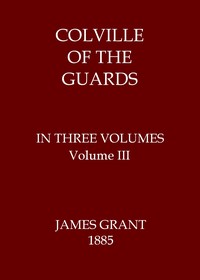
Colville of the Guards, Volume 3 (of 3) — A Reader’s Guide
Science Fiction Utopias
42,607 recorded words. 28 minutes difference from this book's estimate.
View Gutenberg source #66582
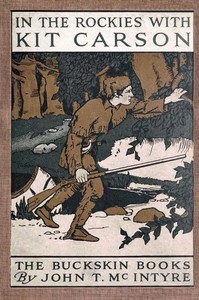
The source record for In the Rockies with Kit Carson — Context and Discussion measures this digital text at 36,338 words, 2 hr 38 min estimated reading time, and 20 detected text sections.
The text analysis averages about 17.8 words per sentence, while the detected sections provide another way to judge how the source is divided.
Project Gutenberg metadata also associates the work with “Rocky Mountains -- Fiction,” connecting these edition facts with the source record’s subject description.
Explore this collection
These alternatives are selected using recorded categories and estimated reading time.
About 186 minutes
Science Fiction Utopias
42,607 recorded words. 28 minutes difference from this book's estimate.
View Gutenberg source #66582About 259 minutes
Science Fiction Utopias
59,569 recorded words. 101 minutes difference from this book's estimate.
View Gutenberg source #66051About 270 minutes
Science Fiction Utopias
61,884 recorded words. 112 minutes difference from this book's estimate.
View Gutenberg source #65383Search stored excerpts and compare books → Choose by your preferences →
Choices use stored catalog measurements. Estimates vary with reading speed. A shared category is a catalog label, not a claim that two books have the same argument or literary quality.
Search reads excerpt text stored with this catalog and links to its associated Gutenberg record. The connection is stored in the site database; this tool does not recheck that every excerpt is word-for-word identical to that external record. Excerpt search does not cover every chapter and does not verify historical publication dates.
Catalog snapshot checked: 2026-09-26. Coverage: 95 public books, 95 available source excerpts.
Calculated from edition completeness, EPUB availability, text structure and catalogue metadata. Not a user rating.
Total of 100 points, scaled to a 2.5-5.0 range. Editions with an empty description or a missing EPUB file are not scored.
Public-domain source text
The source text is kept in the dedicated reader, separate from this catalogue record and its commentary.
The novel opens with two bronzed, sinewy boys riding a Spanish mule into the Pueblo of Los Angeles, each holding a long-barreled rifle. They are pursuing a thief named Lopez who deserted their trading schooner. The sentry they encounter is relaxed, leaning on his musket, and informs them that American trappers are in the village. This initial encounter sets up a contrast between the boys' urgent mission and the leisurely, sunlit adobe setting, where the only sounds are whispering winds and a stringed instrument. The dialogue reveals the boys' weariness—Joe complains about the mule's back being "like a buck-saw"—and their determination to recover their stolen property.
The narrative begins with a specific, tangible goal: two boys tracking a thief named Lopez who has robbed them and fled ashore. Their search leads them to the Pueblo of Los Angeles, where they encounter a sentry who casually mentions American trappers. This moment introduces Kit Carson, who is described as a trapper known in Taos and Santa Fé. The boys' immediate problem is not just finding Lopez but navigating a foreign environment. The text emphasizes their physical discomfort—Joe's complaint about the mule's gait—and their reliance on Spanish to communicate. The pursuit is not straightforward; they must negotiate with strangers and adapt to local customs. The sentry's relaxed demeanor contrasts with the boys' urgency, highlighting the cultural gap between the seafaring lads and the frontier inhabitants.
After meeting Carson, the boys decide to join Fitzpatrick's trapping company to get within striking distance of Gaunt, a man they are also pursuing. The decision is practical: they cannot follow Gaunt's tracks alone due to Indian danger. Carson suggests joining Fitzpatrick, who is heading to the same country. The arrangement is made quickly, and within weeks they are heading into the wilderness. The text notes that Fitzpatrick is "a hardy, courageous man, a good trapper, and knew the country and its signs." This section underscores the collaborative nature of frontier survival—individual pursuits are subsumed into larger group efforts. The boys' personal mission becomes part of a collective enterprise, and the narrative shifts from individual adventure to group dynamics.
The expedition reaches the headwaters of the Platte in winter, where snow fills the defiles and icy wind moans. The trappers build "half faced" houses—three-sided shelters open to a fire—and spend time dressing pelts and making equipment. The text emphasizes the routine of camp life: hunting only for food, mending gear. However, this routine is shattered when a buffalo hunt leads to an ambush by Blackfeet. Four trappers are killed suddenly and dreadfully. The camp reacts with fury, but the Indians escape, their tracks lost in falling snow. This episode illustrates the constant tension between the trappers' desire for comfort and the unpredictable violence of the frontier. The Blackfeet are described as "daring" and "red marauders," but the narrative also notes that the trappers underestimated them due to the cold.
Readers should pay attention to the recurring contrast between the boys' personal quest and the larger group's survival needs. The narrative often shifts between individual motives—recovering stolen goods, pursuing a thief—and the collective demands of trapping expeditions. The text also uses physical details, like the mule's gait or the construction of shelters, to ground the story in tangible experience. The Blackfeet attack is a turning point, showing how quickly the wilderness can disrupt plans. The novel's structure, with its chapter titles like "Indian Signs—and Indians!" and "A Desperate Experience With Grizzlies," signals a pattern of escalating danger.
There’s something about those old tales—the boys chasing Lopez into Pueblo Los Angeles, Carson’s quiet grit through the Rockies—that lingers like campfire smoke. The Millbank Case: A Maine Mystery of To-day — Themes and Context holds a similar plainspoken loneliness, though its winters are closer to home. Maybe it’s just that both remember how the frontier, in any form, keeps its secrets. The Millbank Case: A Maine Mystery of To-day — Themes and Context feels like that same hush.
A brief reflection can help important ideas stay with you longer.