
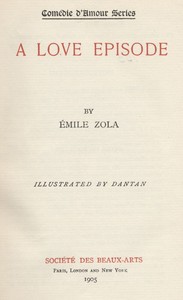
A Love Episode by Émile Zola
If you think 19th-century novels are all about polite drawing rooms and repressed feelings, Émile Zola is here to prove you wrong. A Love Episode (part of his massive Les Rougon-Macquart series) throws you right into the messy, complicated heart of forbidden desire. Forget corsets and coy glances—this is about raw, inconvenient passion.
The Story
Hélène Mouret is a young widow living a sheltered life in Passy with her adored daughter, Jeanne. Her neighbor, Doctor Henri Deberle, tends to the local wealthy families, including his own frivolous and neglectful wife. When Jeanne becomes critically ill, Henri is called in. The long nights of vigil, the shared fear and hope, create a powerful bond between Hélène and the doctor. What starts as gratitude and professional respect ignites into a consuming affair. Zola maps their relationship like a medical chart, tracking every pulse of guilt, every surge of ecstasy, and the slow, corrosive effect of their secret on Hélène's relationship with her increasingly jealous and perceptive daughter. This isn't a story with easy villains or heroes, just people caught in an impossible situation of their own making.
Why You Should Read It
I love this book because Zola refuses to judge his characters. He just shows you who they are. Hélène isn't a temptress; she's a good woman surprised by her own capacity for feeling. Henri isn't a cad; he's a man starved for real connection. Their love feels real because it's so tangled up with guilt, fear, and the mundane details of daily life. Zola's famous 'scientific' style makes the emotions feel physical—you can almost feel the heat of the sickroom, the weight of a secret glance. It's a masterclass in psychological realism. The most fascinating character might be young Jeanne, whose childish intuition becomes a mirror forcing her mother to see the truth. It’s heartbreaking.
Final Verdict
This book is perfect for anyone who loves character-driven stories where the biggest battles happen inside people's hearts and minds. If you enjoyed the emotional precision of Madame Bovary or the social observation of Jane Austen but wished they were a bit grittier and less polite, Zola is your next stop. It’s also a great, more focused entry point into his huge body of work. Fair warning: don't expect a tidy, happy ending. Zola deals in truth, not fairy tales, and the ending will sit with you for a long time. A stunning, sobering look at the cost of passion.





Emma Thomas
1 year agoI was skeptical at first, but the clarity of the writing makes this accessible. Absolutely essential reading.